
The Three Rivers Fibershed’s post on instagram.
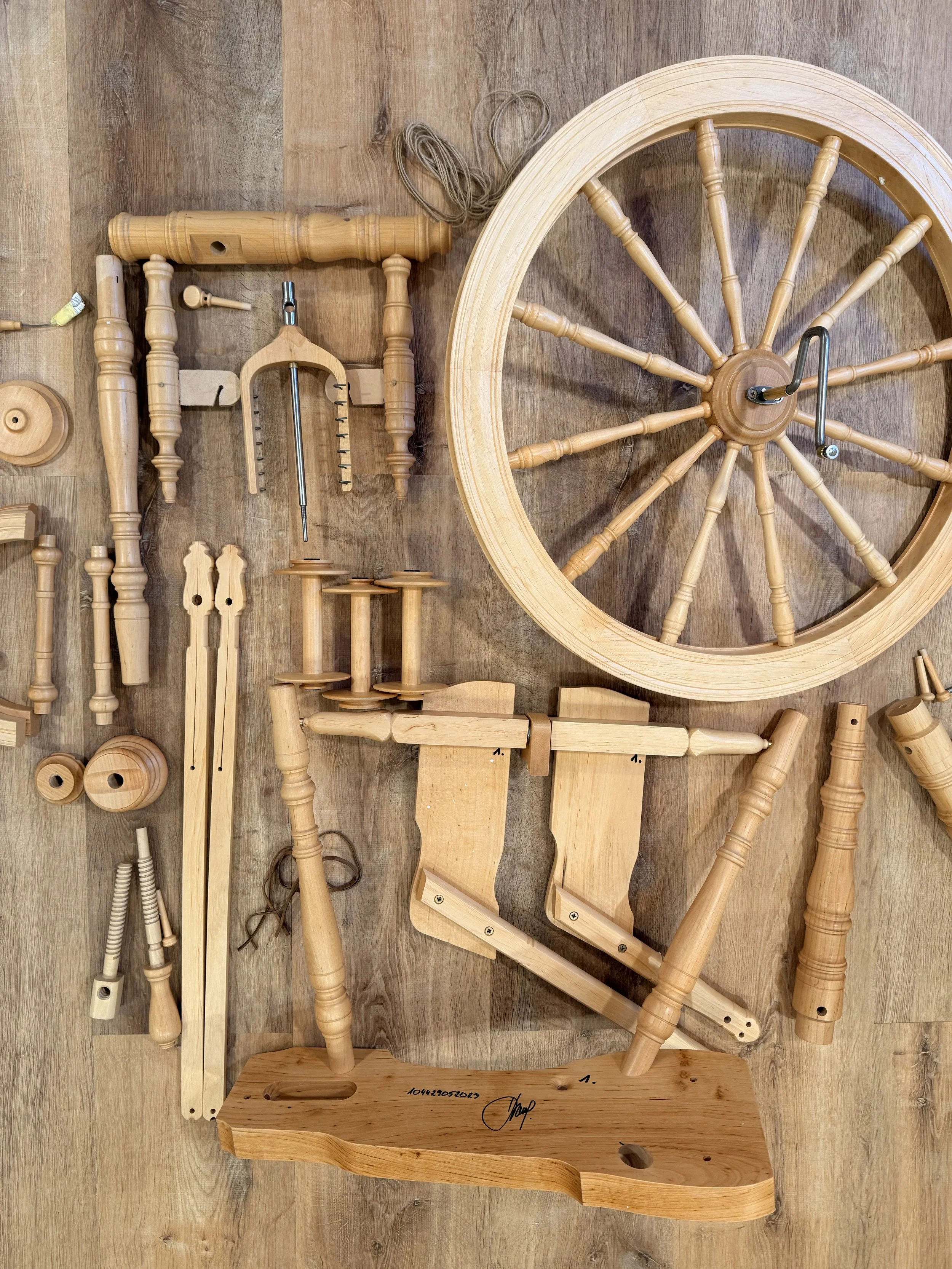
Assembling my spinning wheel, a Kromski Symphony.
At first, I almost skipped applying. When I saw the call for artists, I ignored it. But as the deadline got closer, I realized it might be a great opportunity. I started considering proposal ideas, and on the last day, I finally decided to submit my application.
The idea for my proposal came after I saw the handwoven curtains I made for Prospect Refuge’s Potter’s House project in St. Paul, now hanging as café curtains in a client's home. Looking at a photo of sunlight shining through the fabric, I noticed how the light was brighter in some spots and softer in others. The folds and the way the light moved made the cloth seem to change all the time. It made me wonder what would happen if I wove with light in mind from the very start.
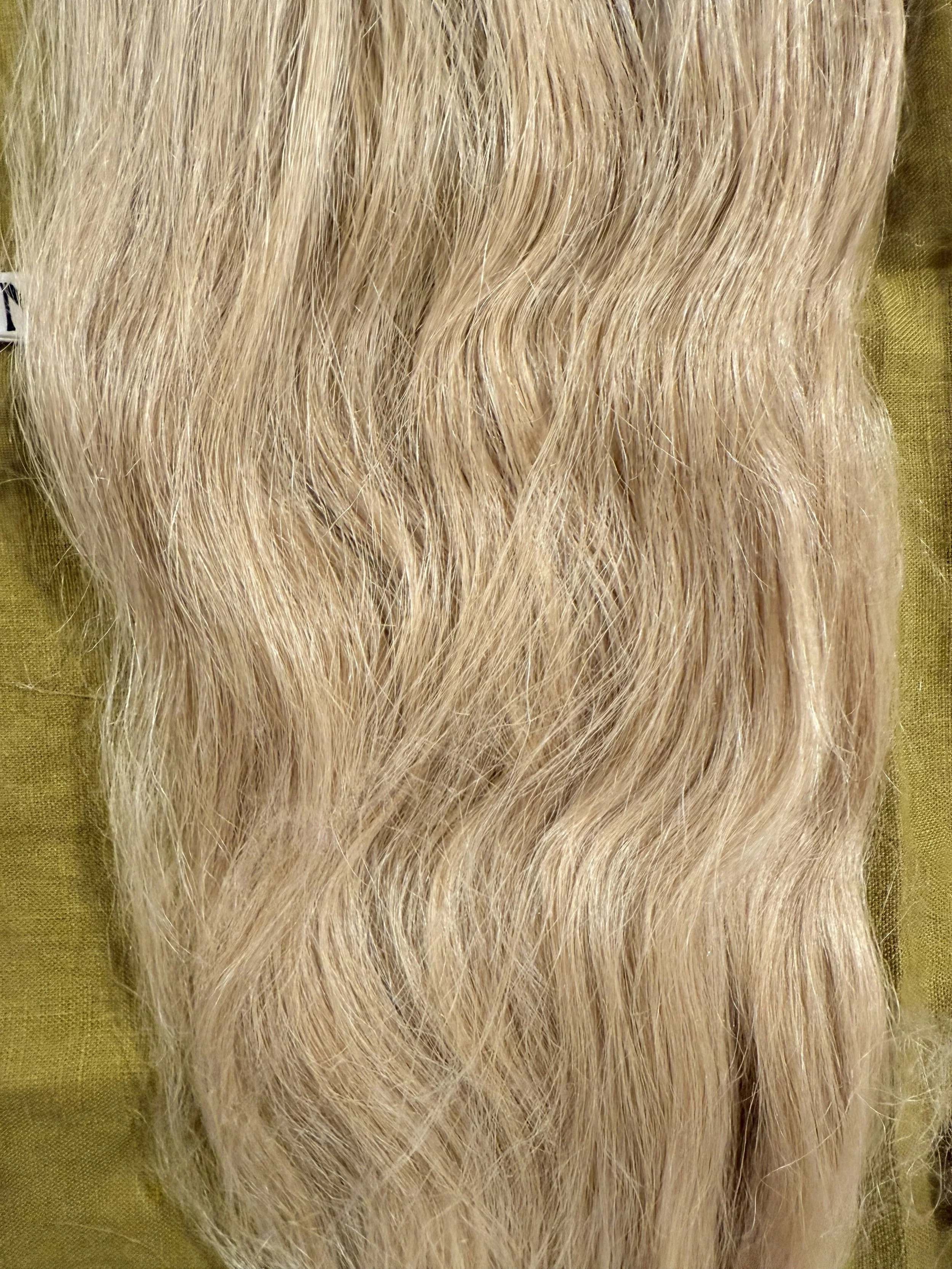
Flax strick, spread out on a linen cloth
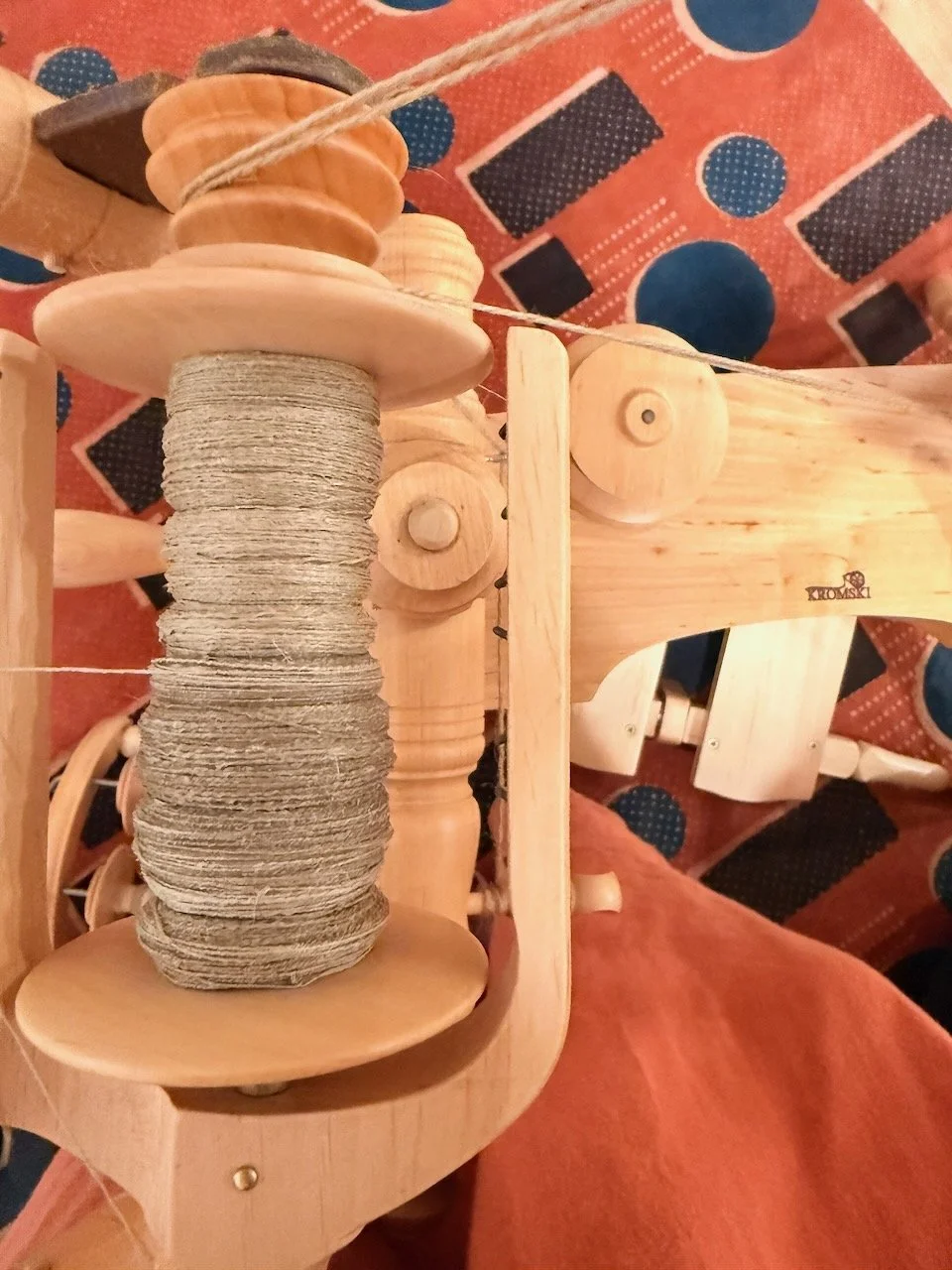
Hand-spun linen singles.
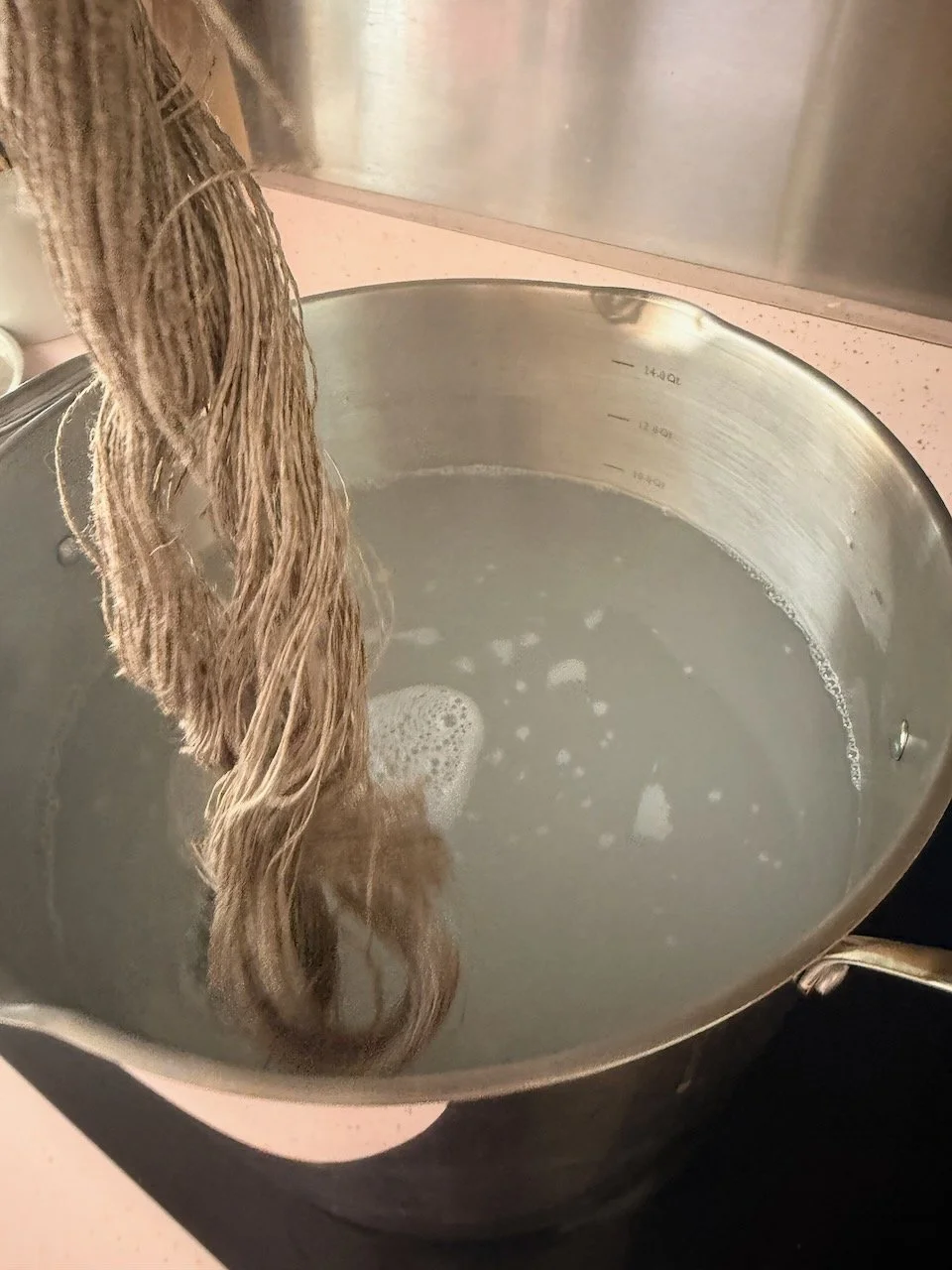
Boiling plied linen yarn to remove the pectin and soften the fiber.
In early April, I got an email saying I had been selected to participate. I was thrilled! It was the first show I'd ever been accepted into.
I knew I wanted to learn to spin flax myself, so I started researching the best spinning wheel for turning flax into linen. I settled on the Kromski Symphony, a Saxony-style wheel. When it arrived, I assembled it and started spinning my first strick of flax, a handful of processed flax fibers bundled together.
Spinning flax is drastically different from spinning alpaca or wool. It has no give, and you have to spin it wet. At first, it was awkward. I couldn't find a good rhythm, and I was constantly making small adjustments to the tension. It was really frustrating, and I thought, What did I get myself into? But after a week of practice, I started to get the hang of it. Soon I had spun my first strick and was ready for the next step: scouring.
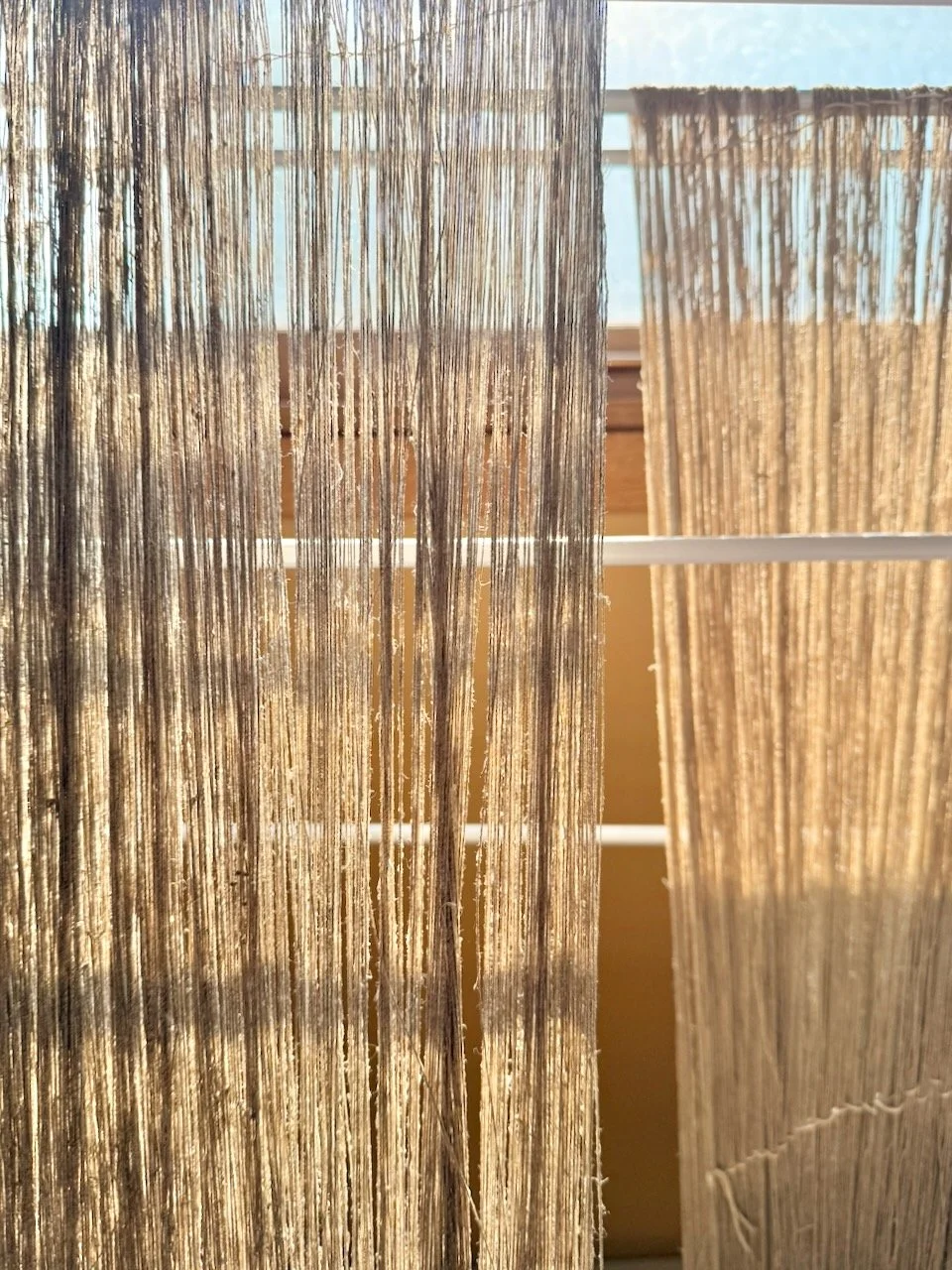
Linen yarn drying on a rack.
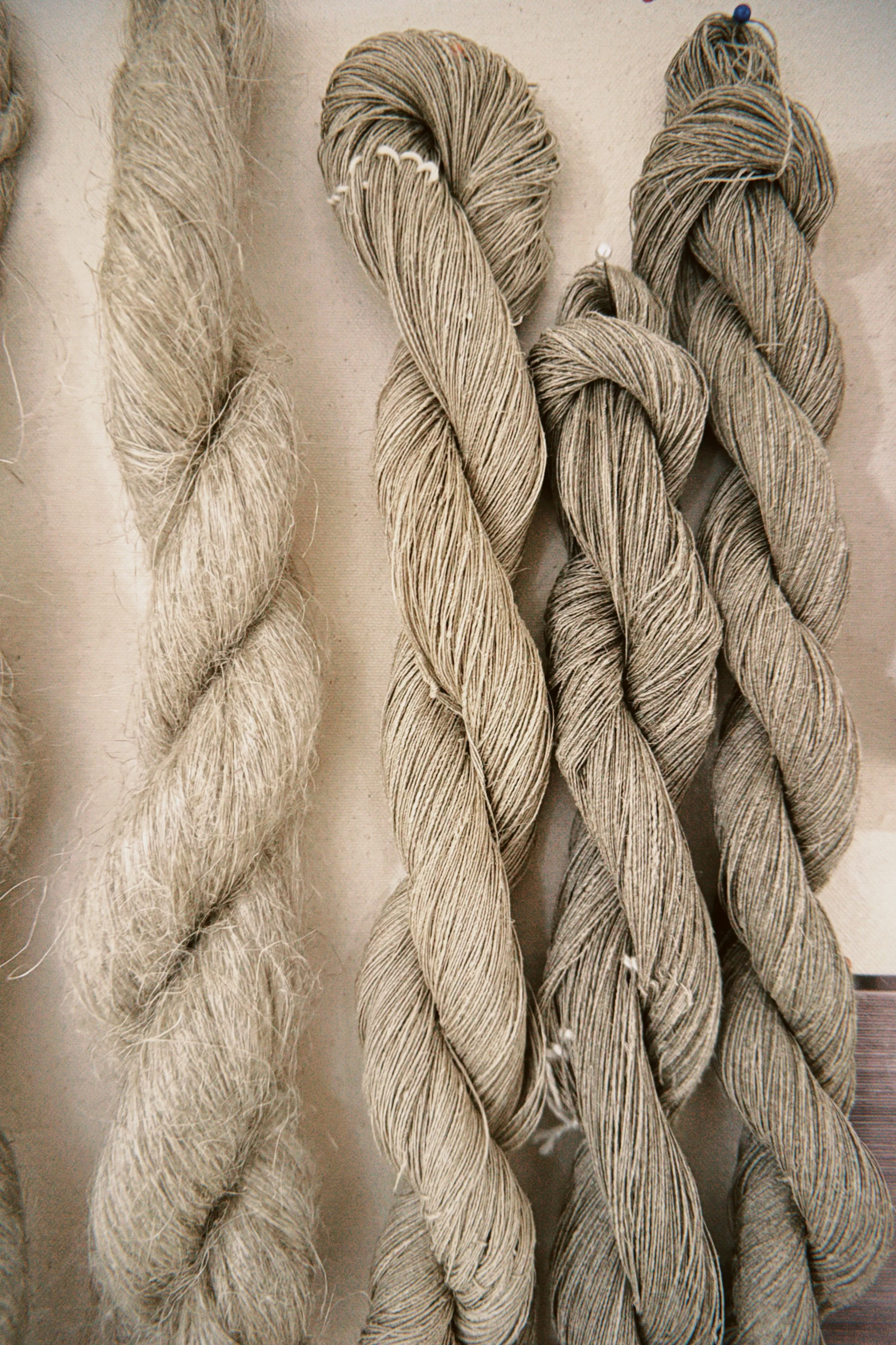
Linen skeins ready for warping.
To scour hand-spun linen, I boiled the skeins in water with washing soda to remove the remaining plant pectins and dirt. After boiling, I thwacked each skein, which means smacking the damp yarn sharply against a hard surface like a countertop. Thwacking helps the twist settle, removes excess water, and smooths and aligns the fibers. Then I hung the yarn to dry with weights attached. The weight pulls the fibers straight, smooths out kinks, and gets the yarn ready for weaving.
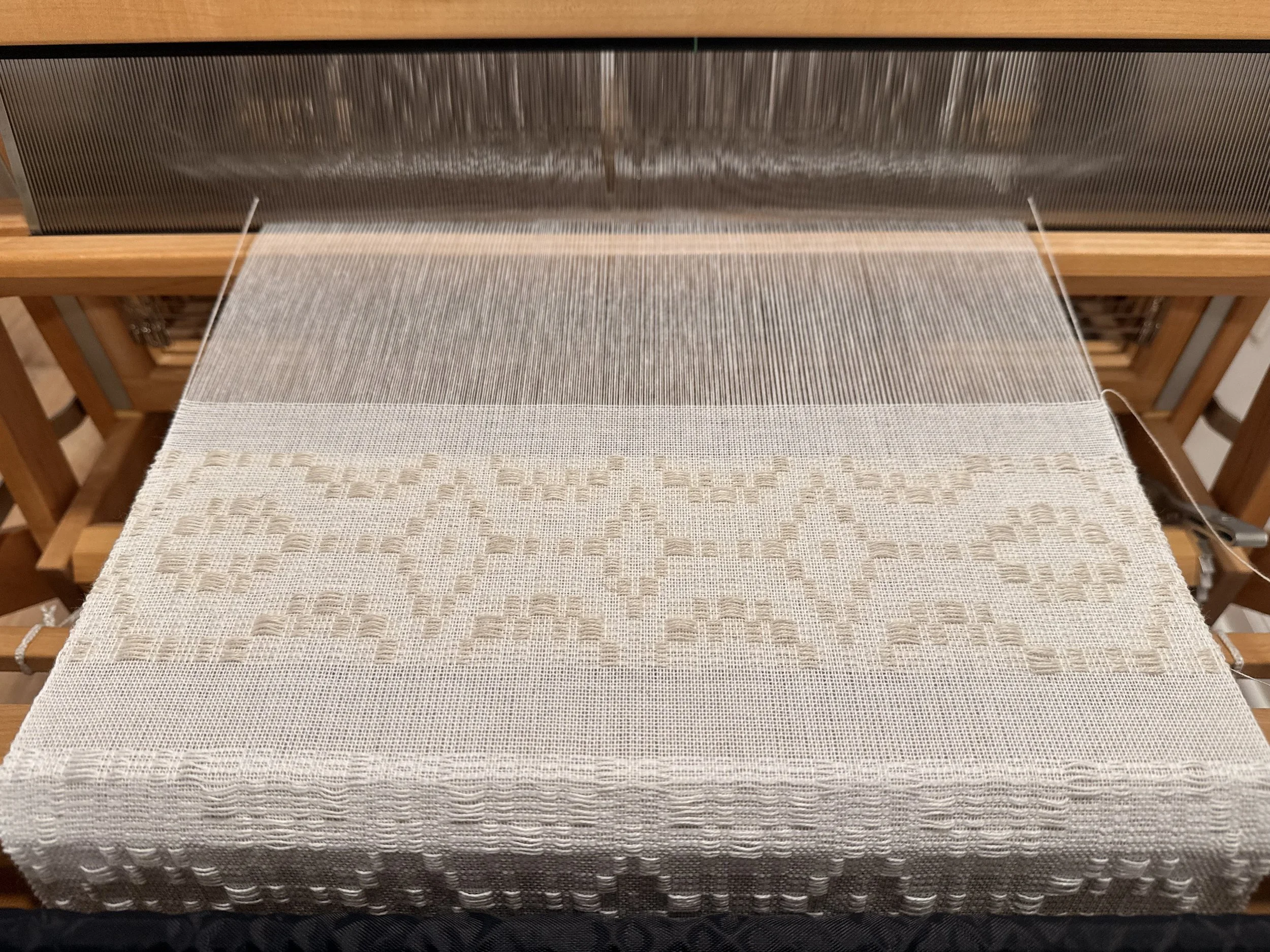
Sample pattern on loom.
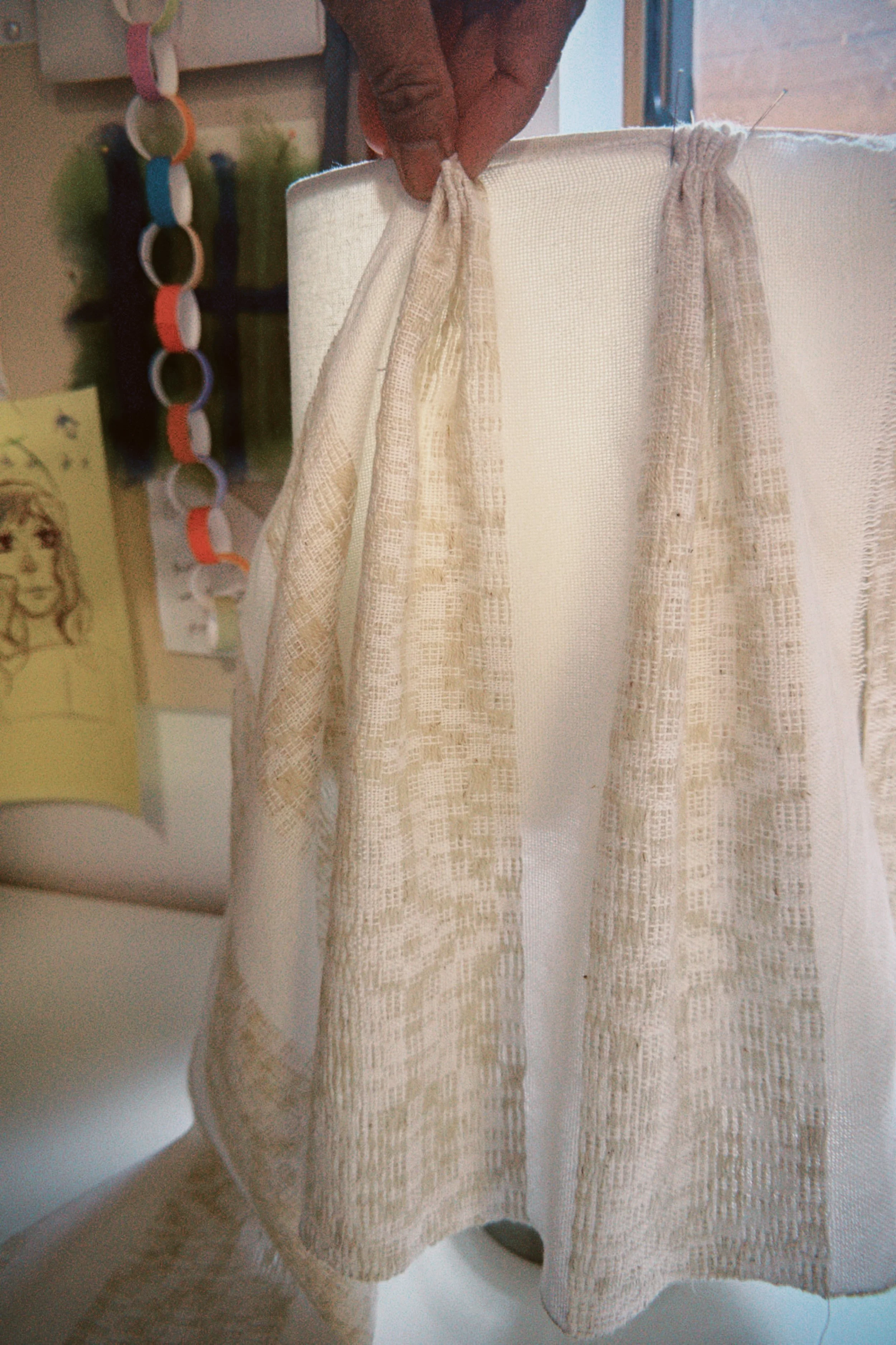
Draping fabric against the lampshade.
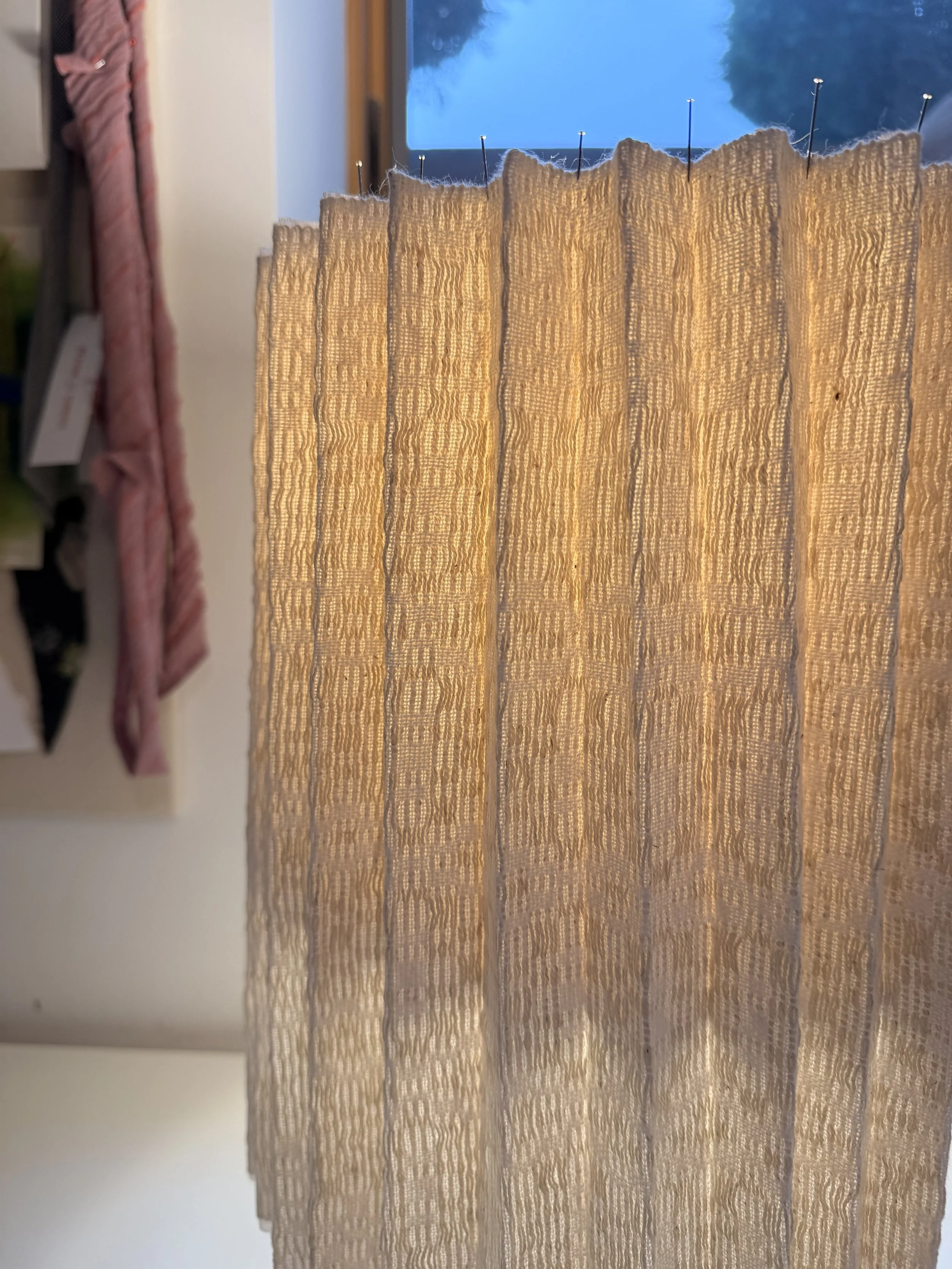
Pleated fabric on the lampshade.
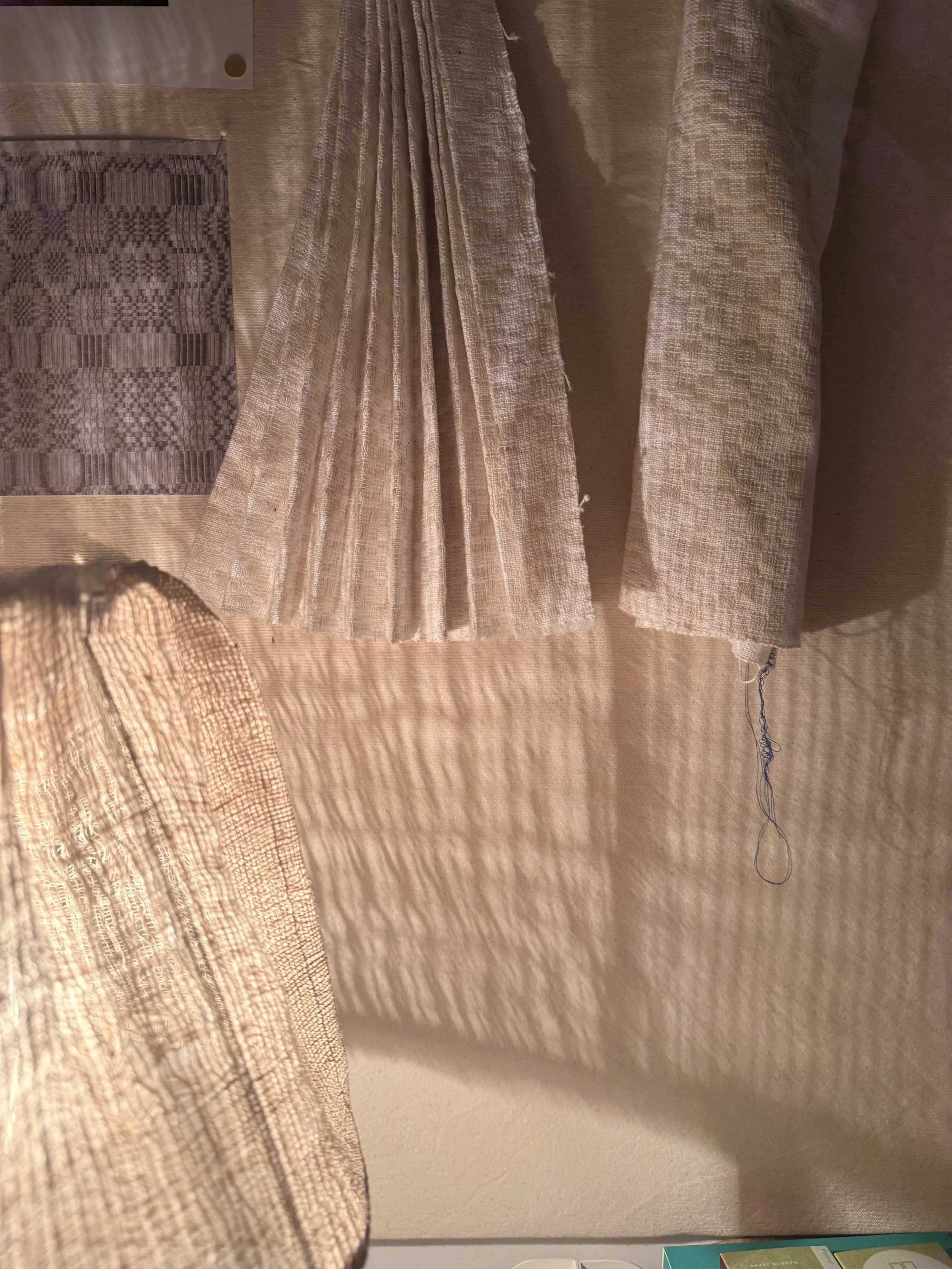
Lampshade casting shadows.
Before weaving with my hand-spun linen, I wound a short warp, worked out the calculations, and sampled the pattern in cotton. Cotton and linen behave differently, but I wanted a practice fabric I could sculpt, drape, and pleat to see whether what I envisioned was possible. I draped the sample over a lampshade in my studio to see how the light would shine through it and what kind of shadows it would cast. I was pleased with what I saw and felt confident moving on to weaving the final fabric in linen.
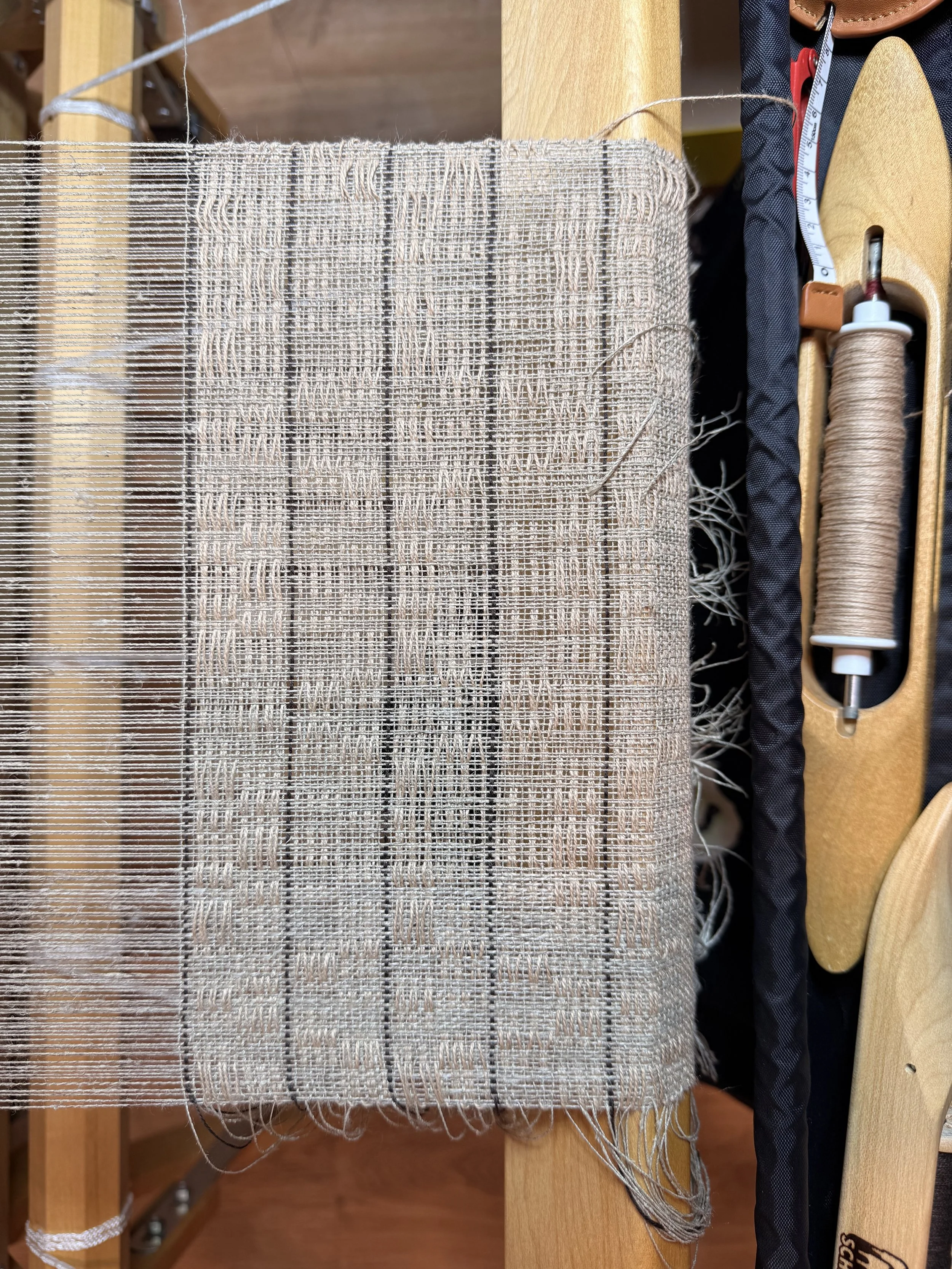
First woven piece, this one for the pleated fabric.
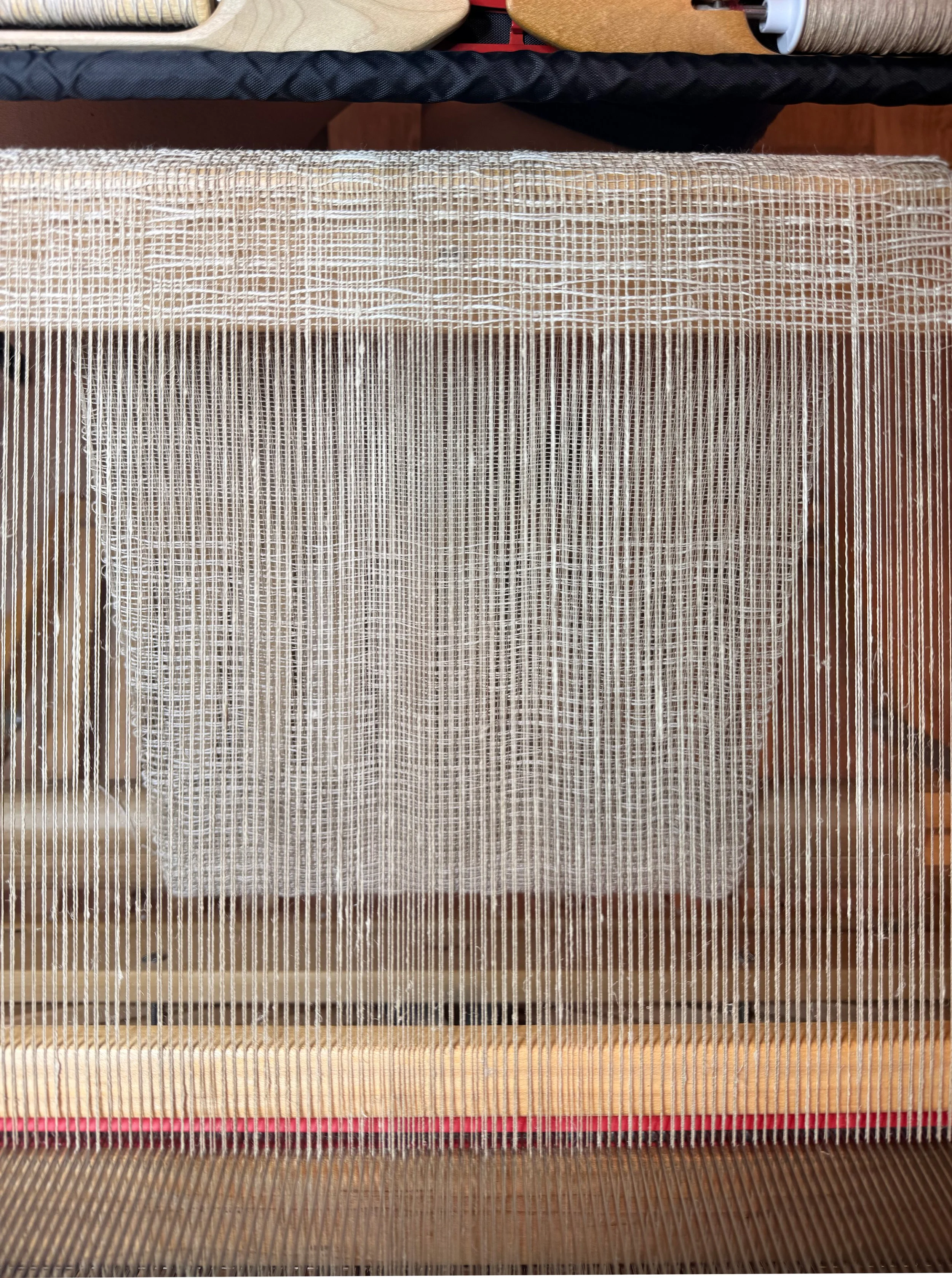
Second woven piece on the loom. The weft yarn is cotton.
The first two lampshade fabrics I wove took different approaches. The pleated fabric is more densely woven, and I kept its fringe as a design element. The second is an open weave, meant to let more light through and cast interesting shadows. I started to assemble the lampshade with the final fabric.
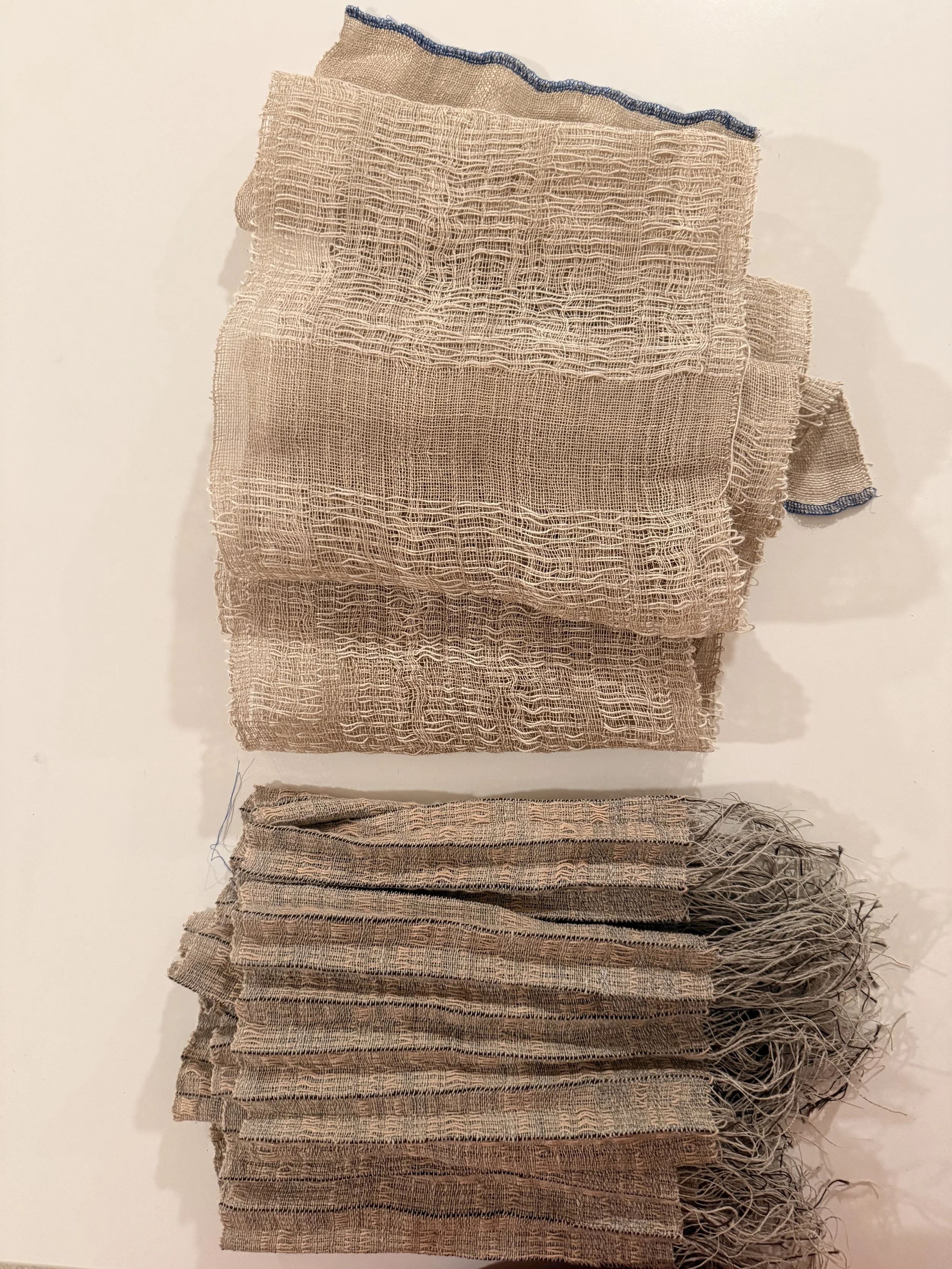
The linen fabric is ready to be draped onto the lampshade armature.
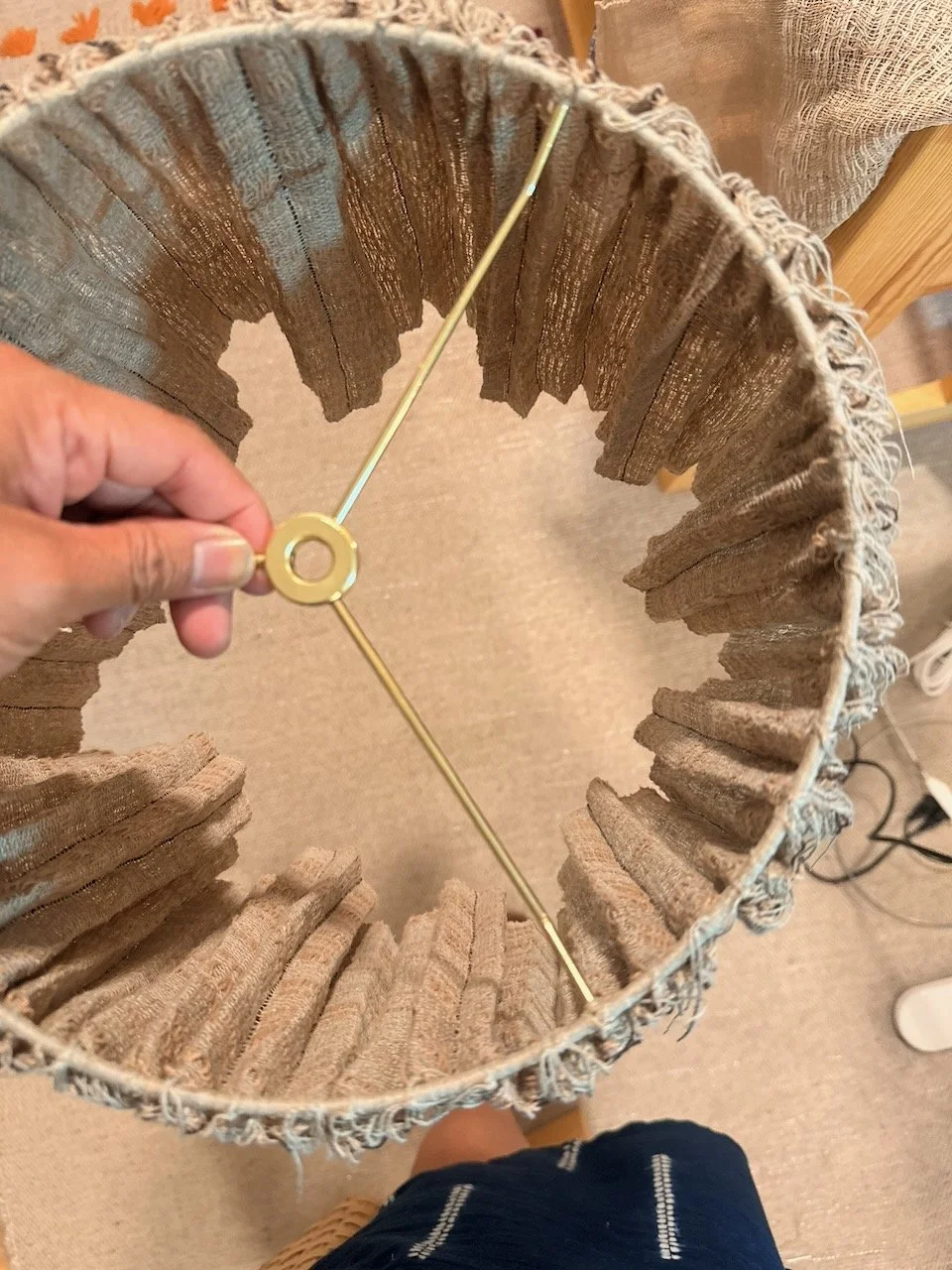
Pleated fabric on the lampshade frame.
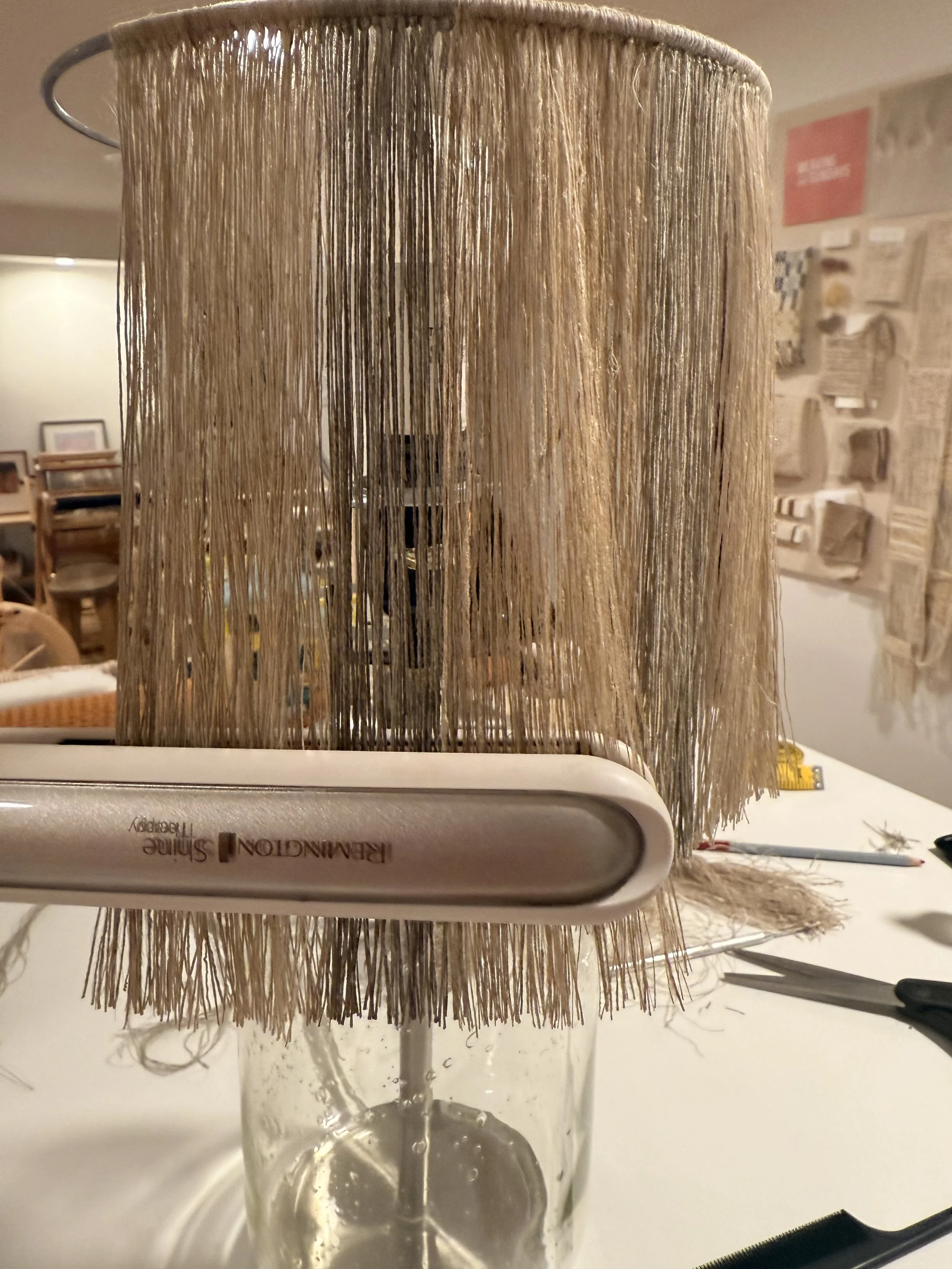
In progress fringe lampshade.
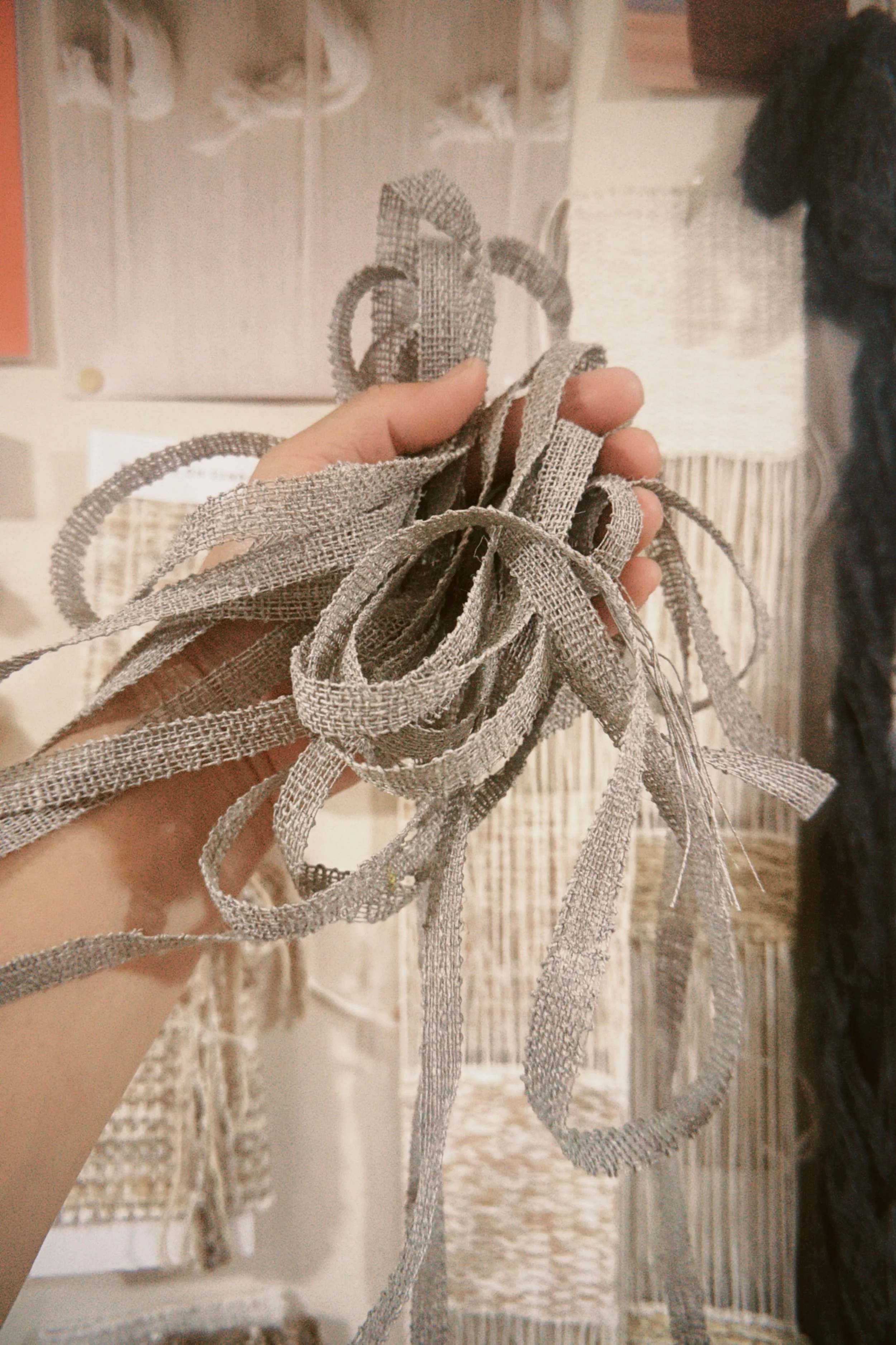
Hand woven tape for a lampshade.
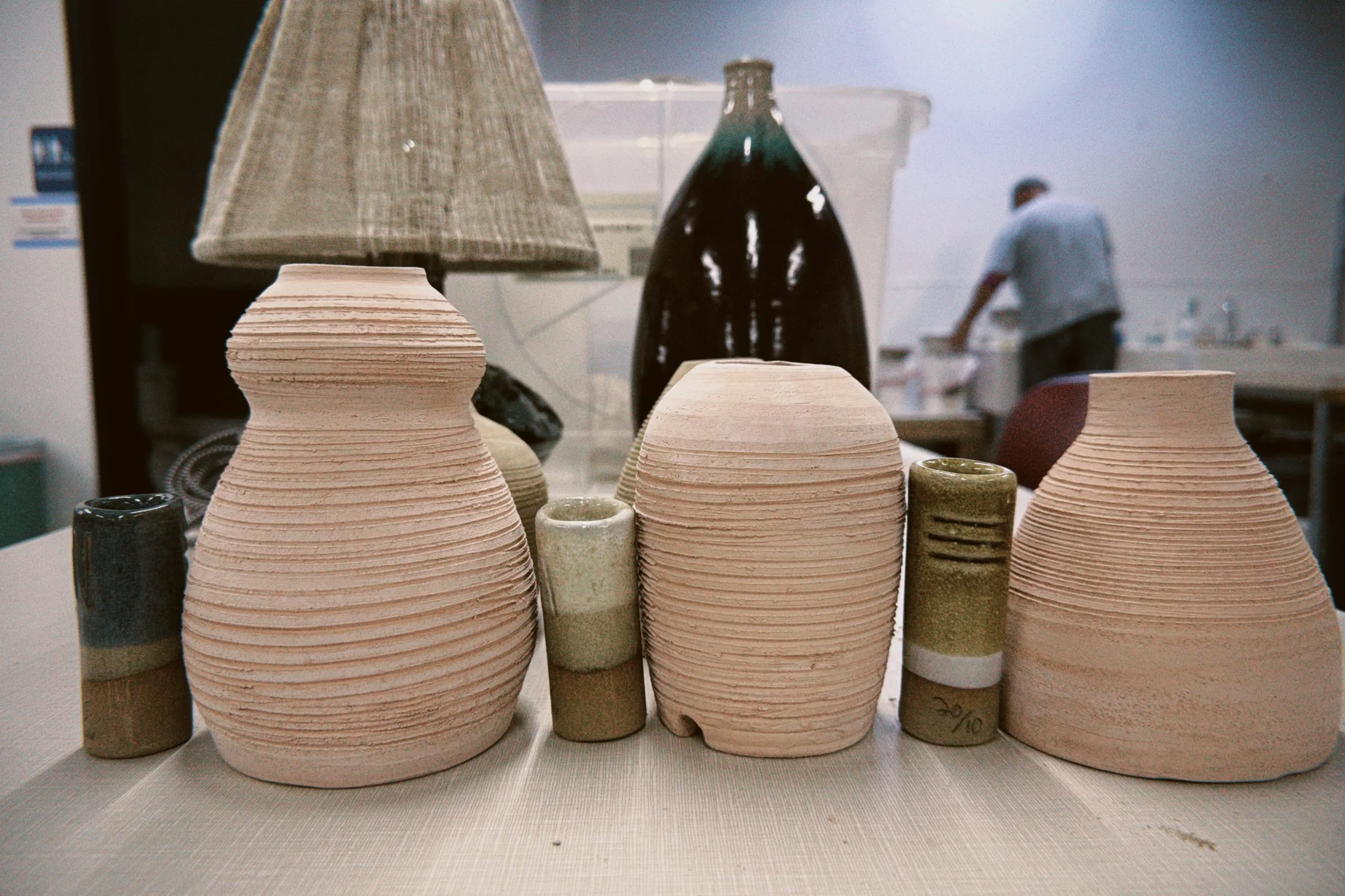
My proposal included a collaboration with ceramicist Emily Schoeler. At the start of the project, I shared that I wanted to bring clay into the finished pieces, and she created an assortment of interestingly shaped bases with beautiful glazes. For the final pieces, I chose three that paired perfectly with the frames I had made.
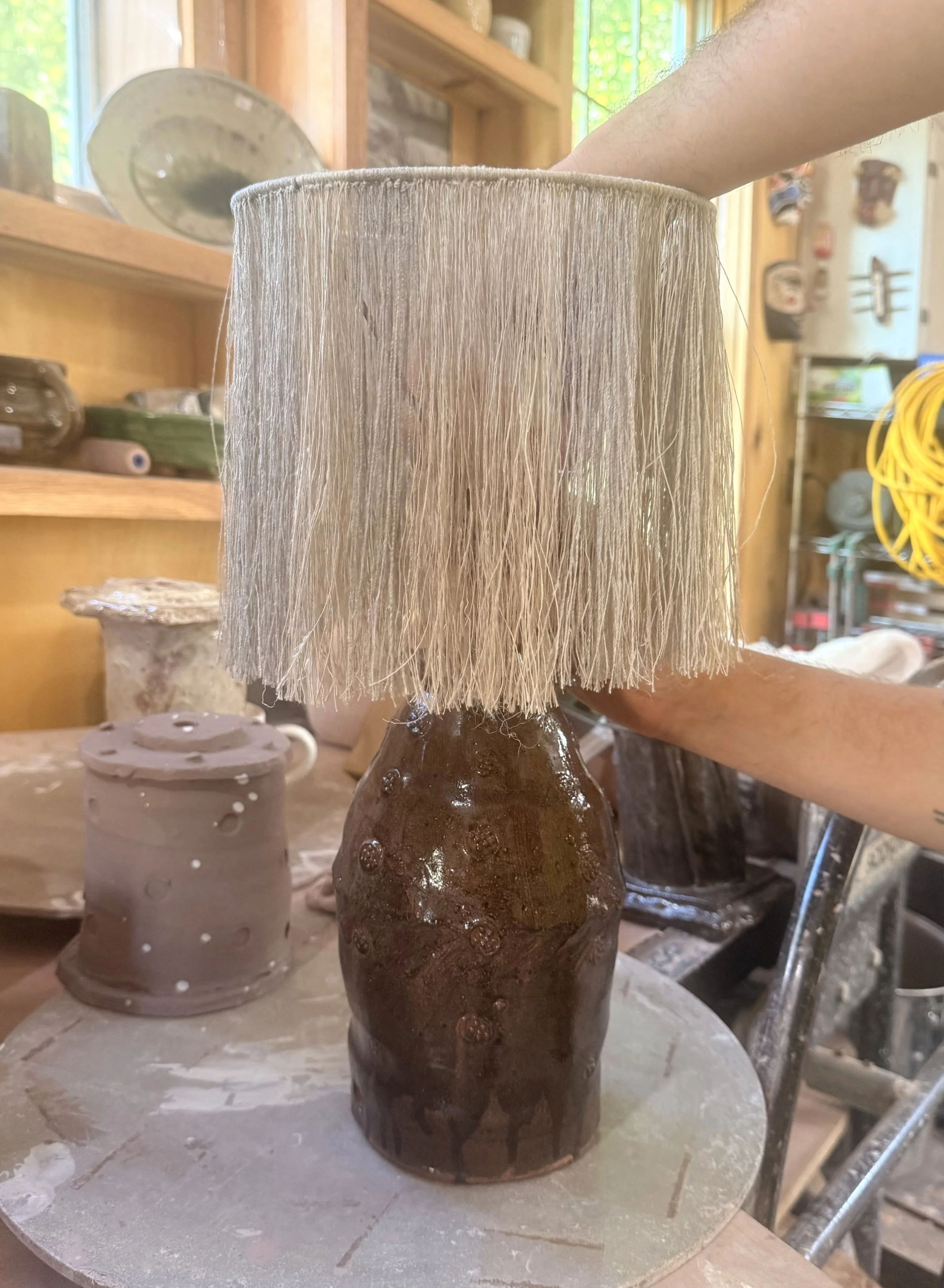
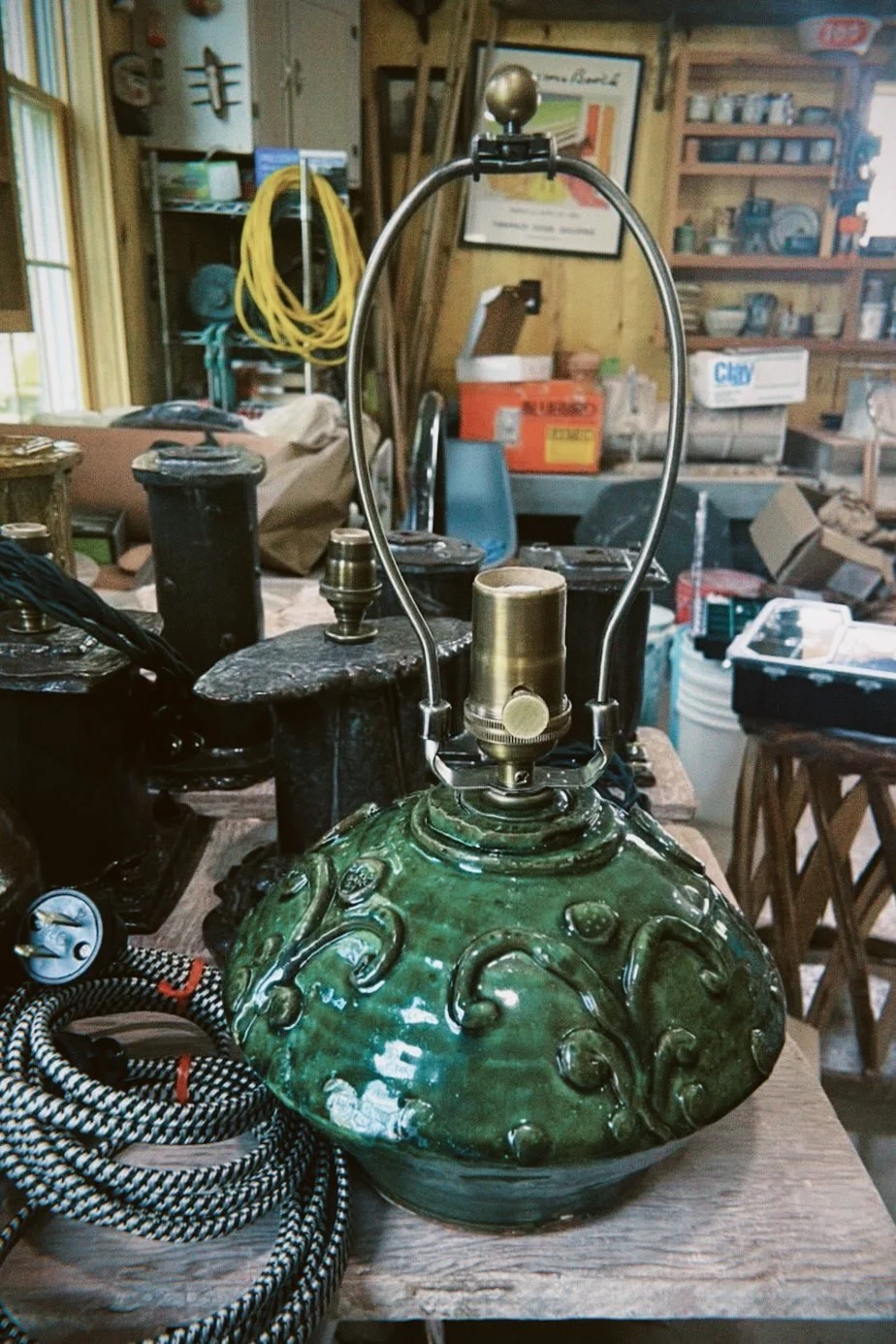
Then, on a trip to the Mill City Farmers Market, I came across Nick Earl's work. Two lamp bases on his table stopped me in my tracks. I knew the glaze, color, and texture of his work would be a great addition to the project. I took his card, reached out to him on Instagram, and drove to his studio in Marine on St. Croix, where I chose these two ceramic bases for the collection.
I'm so excited to show my work for the first time in a public, curated setting. On December 12, 2026, Living Lineage: Linen in Scandinavian Folk Art and Modern Innovation opens with a full day of events celebrating linen at the Open Book Gallery. There will be local makers, hands-on demonstrations, and thoughtful conversations exploring the rich history of linen and its possibilities for the future.
The day ends with the grand opening and reception of the exhibition, a collaboration between Three Rivers Fibershed and the Weavers Guild of Minnesota, generously funded by the American-Scandinavian Foundation.
I can't show you the entire collection just yet, so I hope you'll come see it in person! Join us for any part of the day, or stay for the whole celebration.