
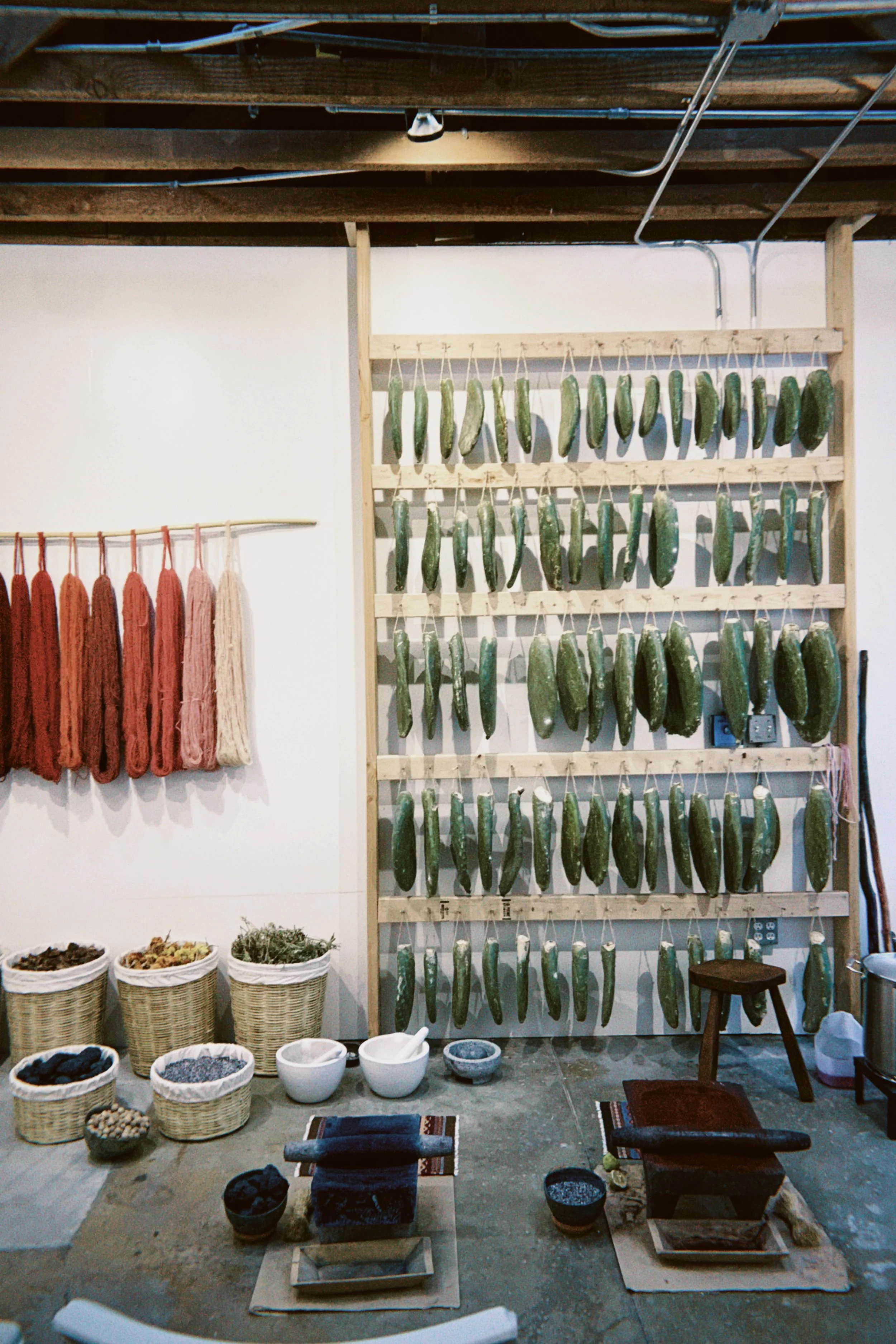
Maestro Porfirio Gutierrez's Studio
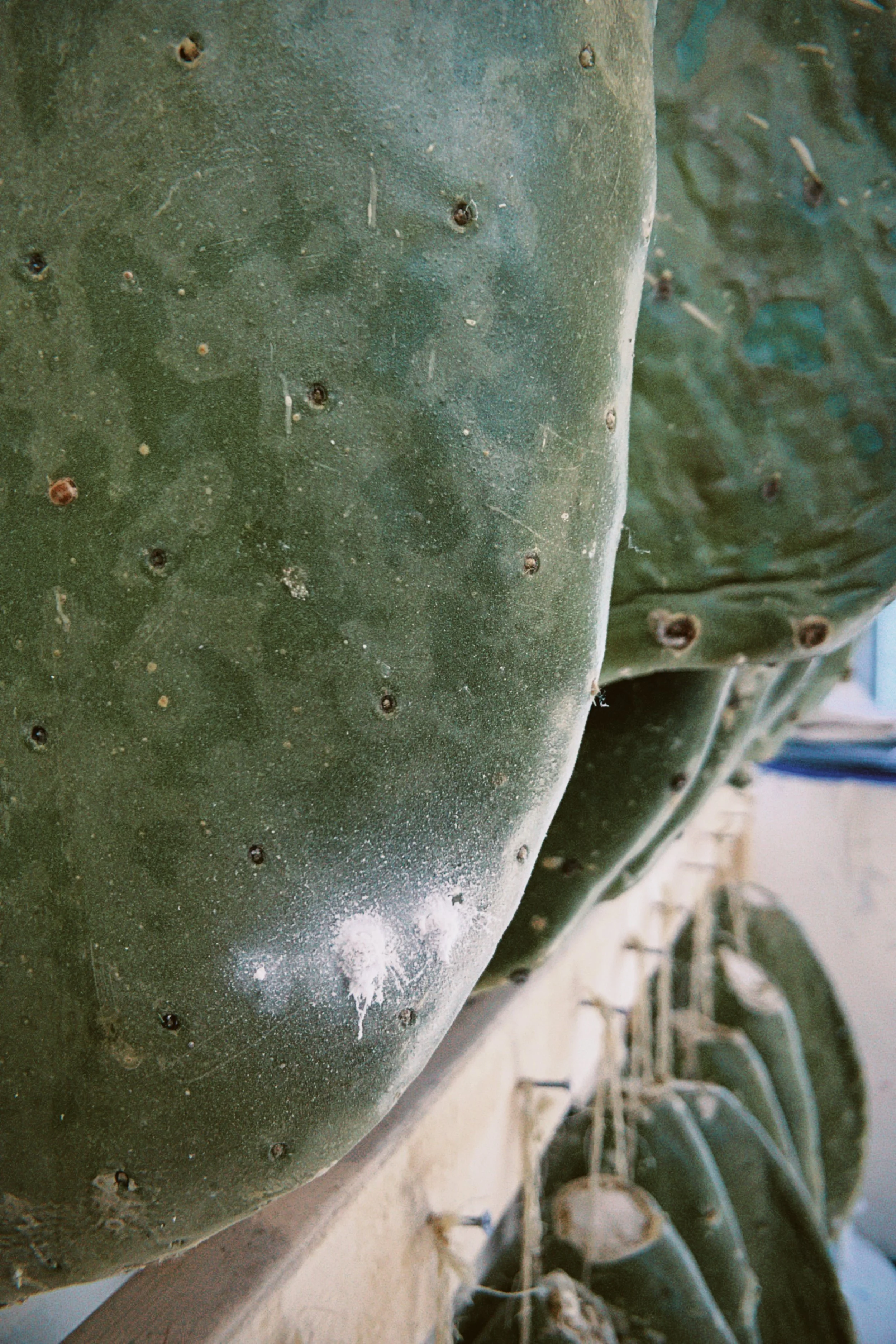
Cochineal insects on prickly pear cacti.
This is a story that only the patient hands of time could reveal: the gradual unfolding of a series of scarves I call Crimson & Blue.
It began with an Instagram connection with a kindred spirit, and that meeting took us both to Ventura, California, in October 2021 for a class with Maestro Porfirio Gutiérrez. For four days, we worked with indigo and cochineal, the tiny insect that lives on prickly pear cactus and has given the world its reds for centuries.
I was profoundly inspired, not only by his mastery of dyeing and weaving but also by the wisdom he shared. The words that made the strongest impression on me were these: deepen your relationship with nature; be slow, intentional, and deliberate in how you live. I left Ventura inspired and promised myself I would take those words into my life and art practice.
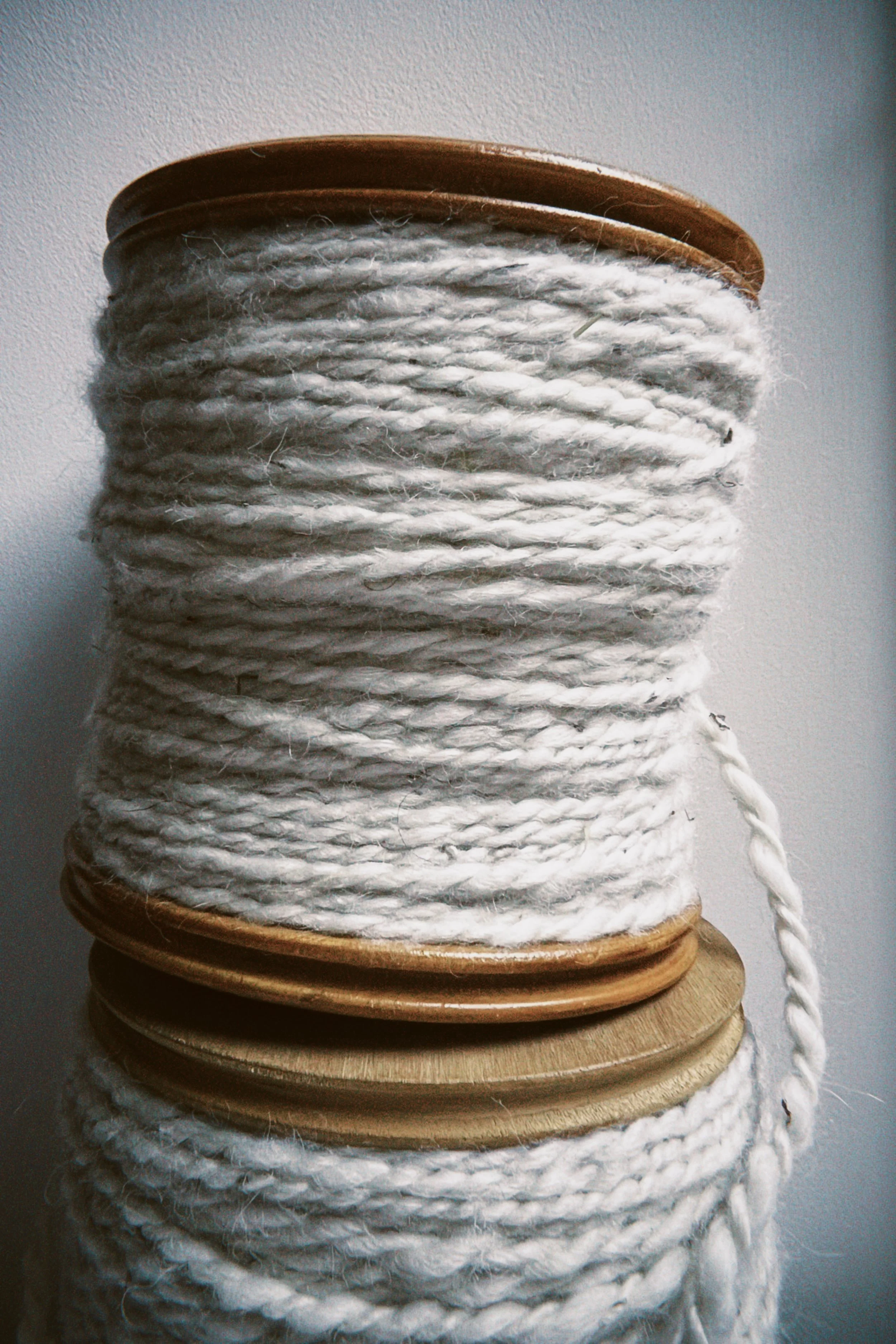
two bobbins full of plied alpaca yarn.
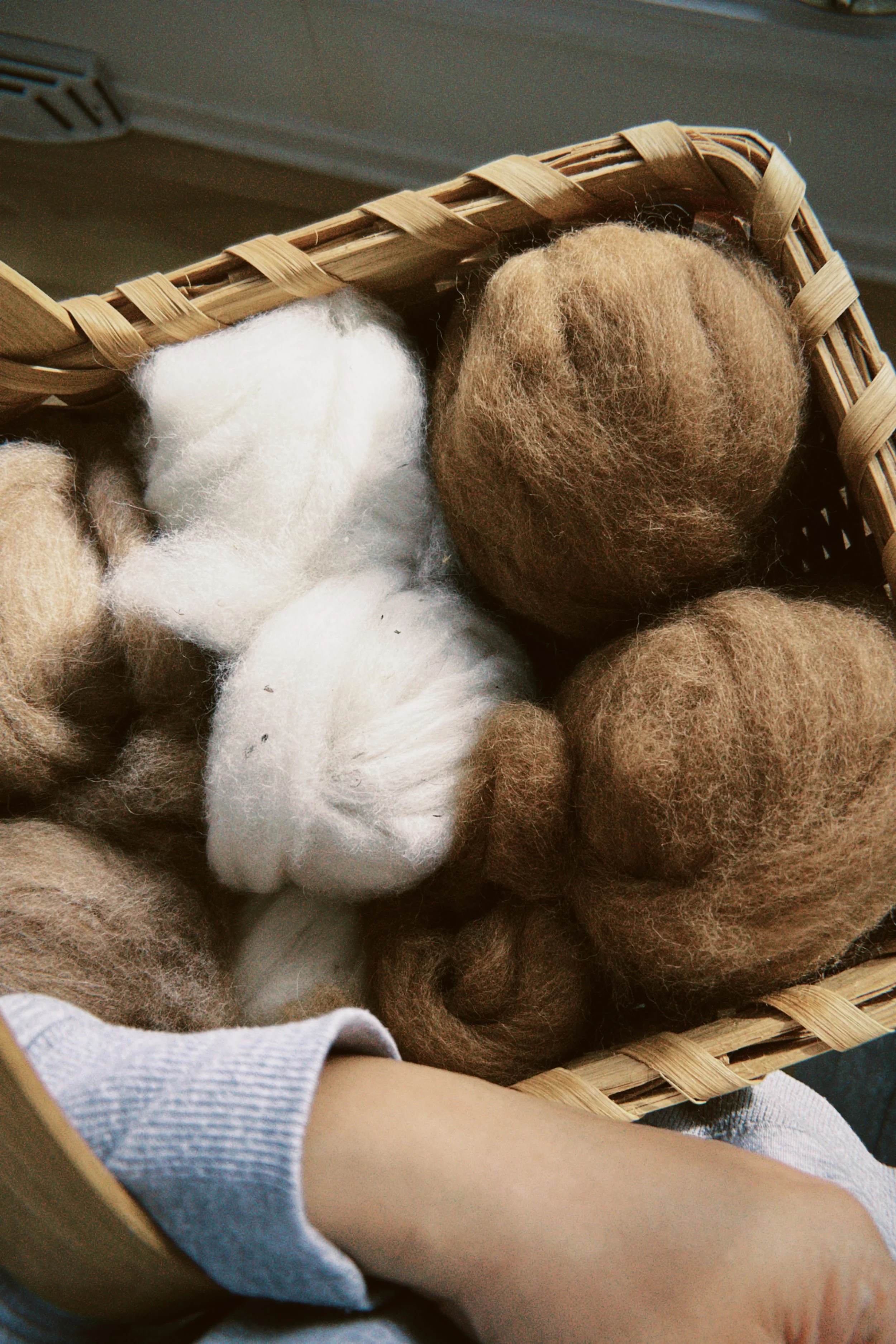
Camel and white alpaca roving.
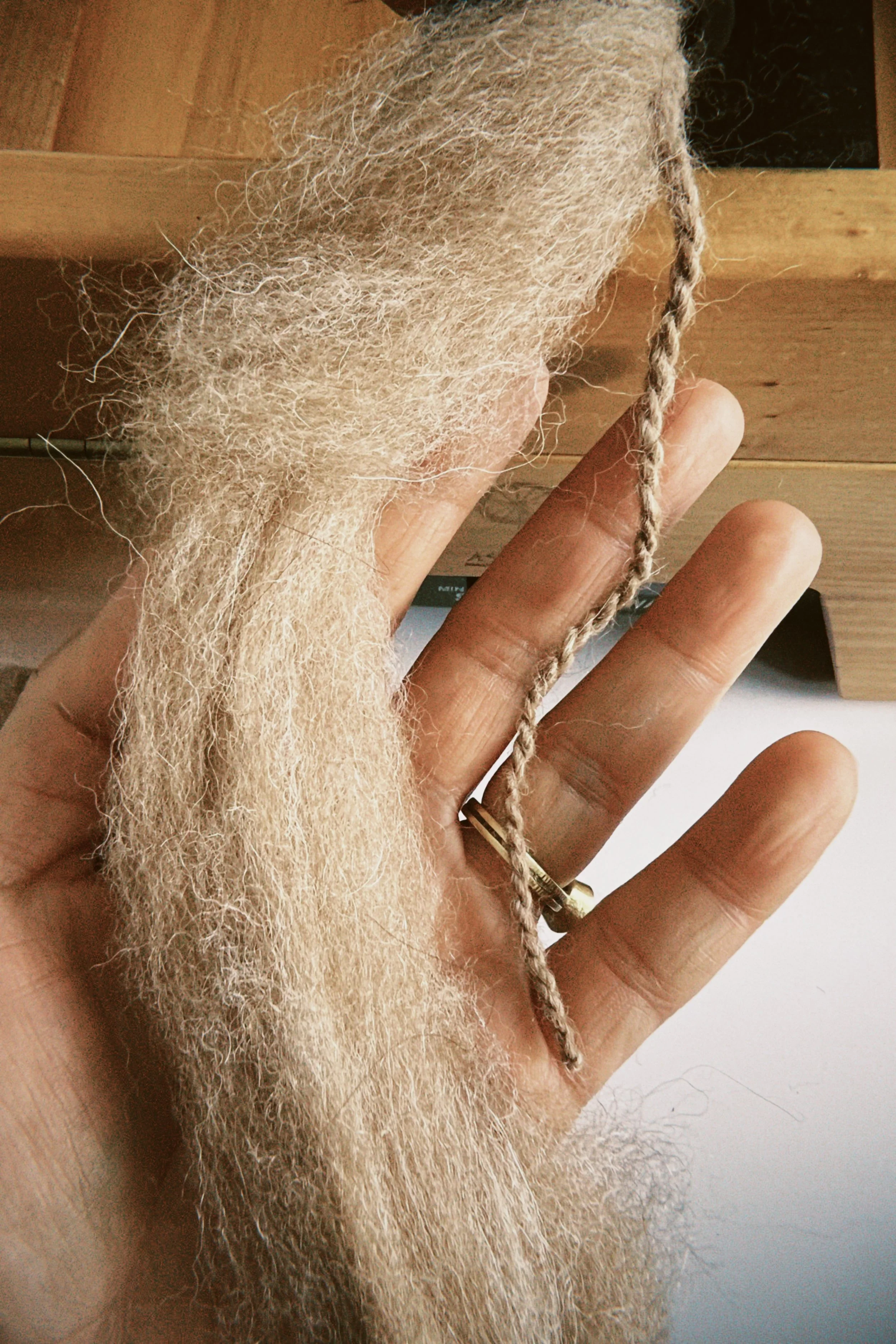
Raw alpaca spun into yarn.
Before I left, I purchased cochineal and indigo from his studio and put them in my bag, hoping to take a piece of that magic home. I longed to recreate what I had learned, to coax the reds from cochineal and the blues from indigo with my own hands. I set the precious materials aside and began hand-spinning alpaca fiber, a gift from a friend whose farm is full of gentle alpacas. From December 2021 to October 2024, I spun the roving into yarn bit by bit, weaving the work into the flow of everyday life.
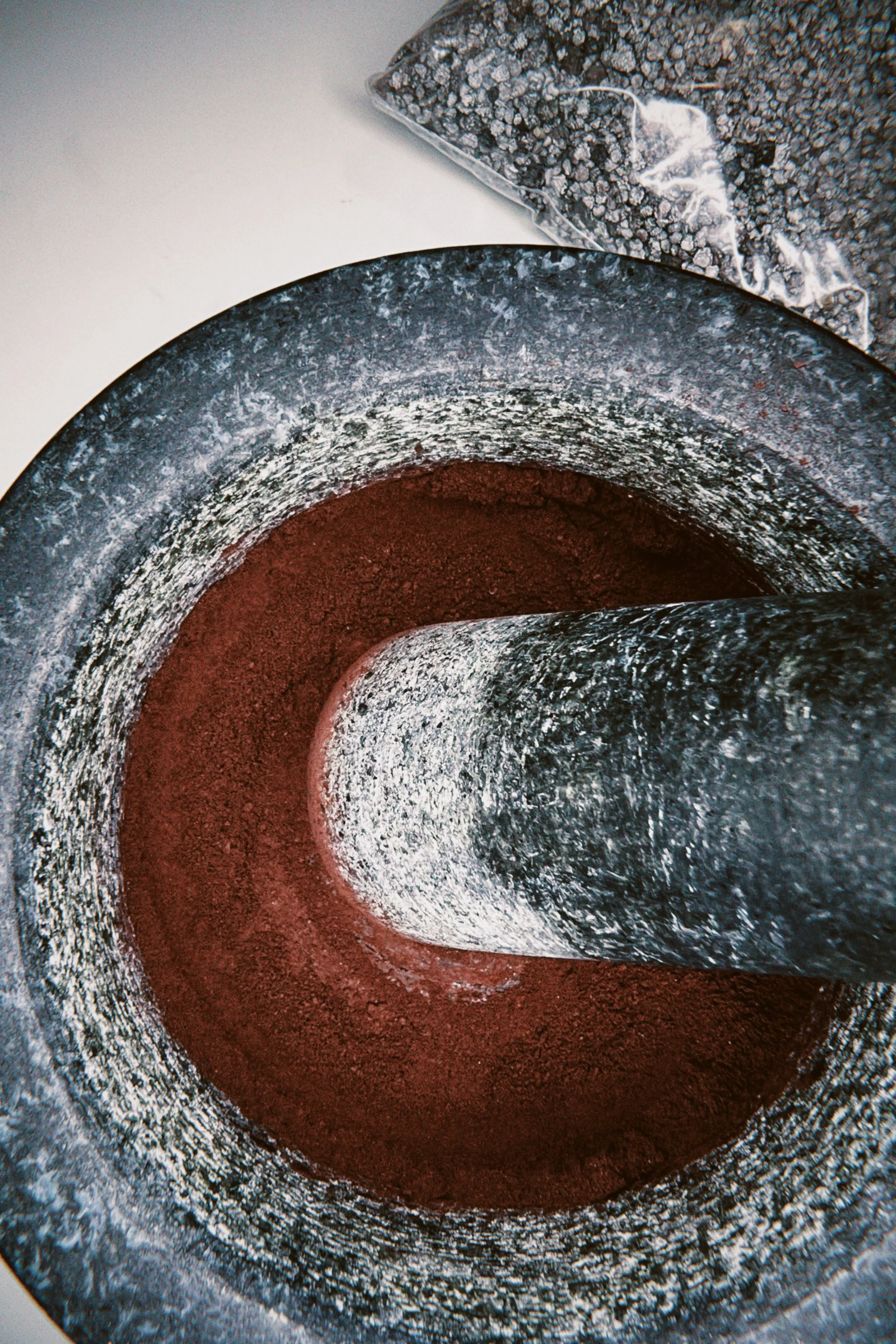
Cochineal being ground in a mortar and pestle.
Three years later, I was finally ready to awaken the colors of cochineal and indigo. I followed each step as faithfully as I could remember. With mortar and pestle, I ground the pigments by hand until they were as fine as dust, then mixed them with water into a paste and stirred it gently into a hot bath.
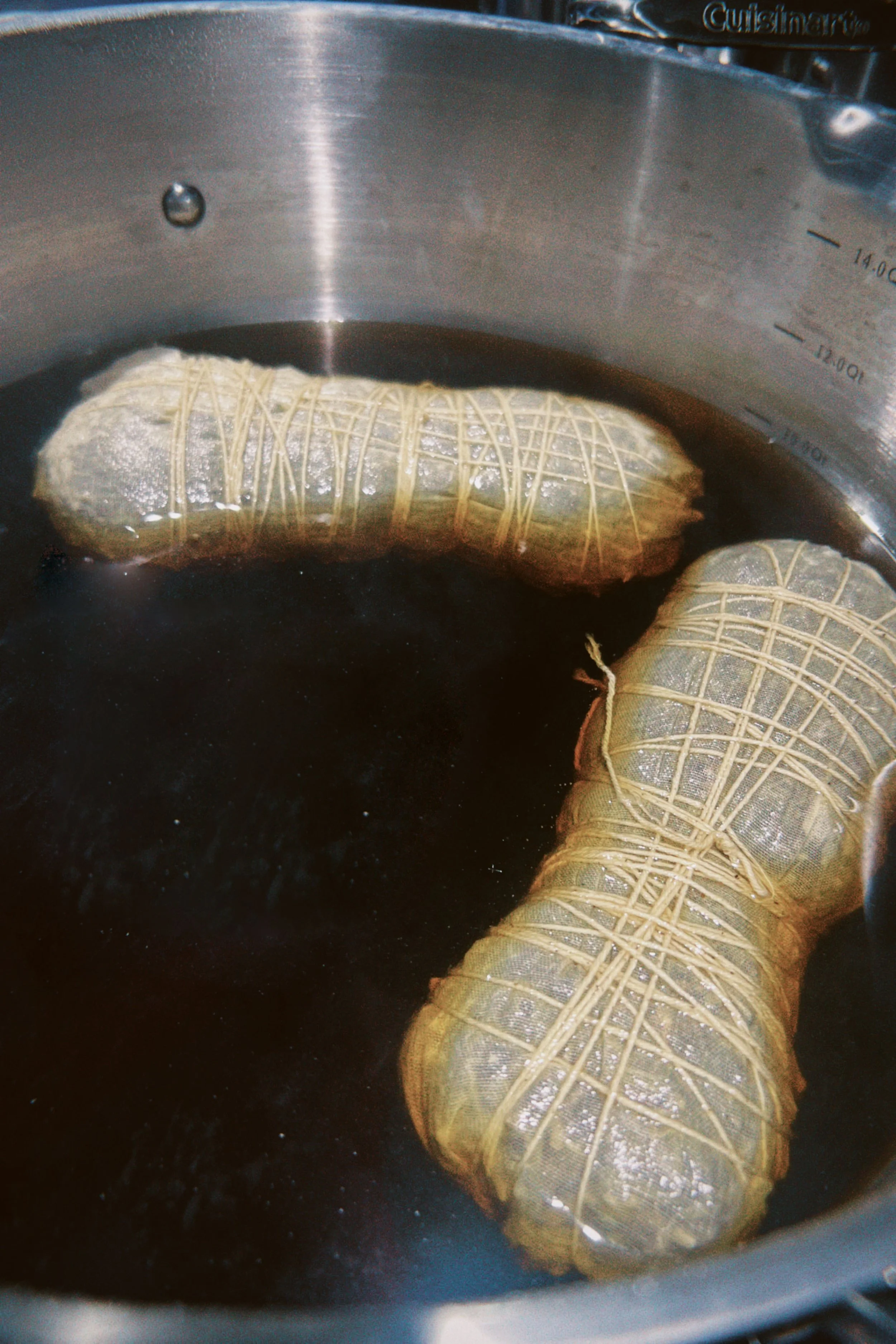
Pericon wrapped in cheesecloth soaking in the dye vat.
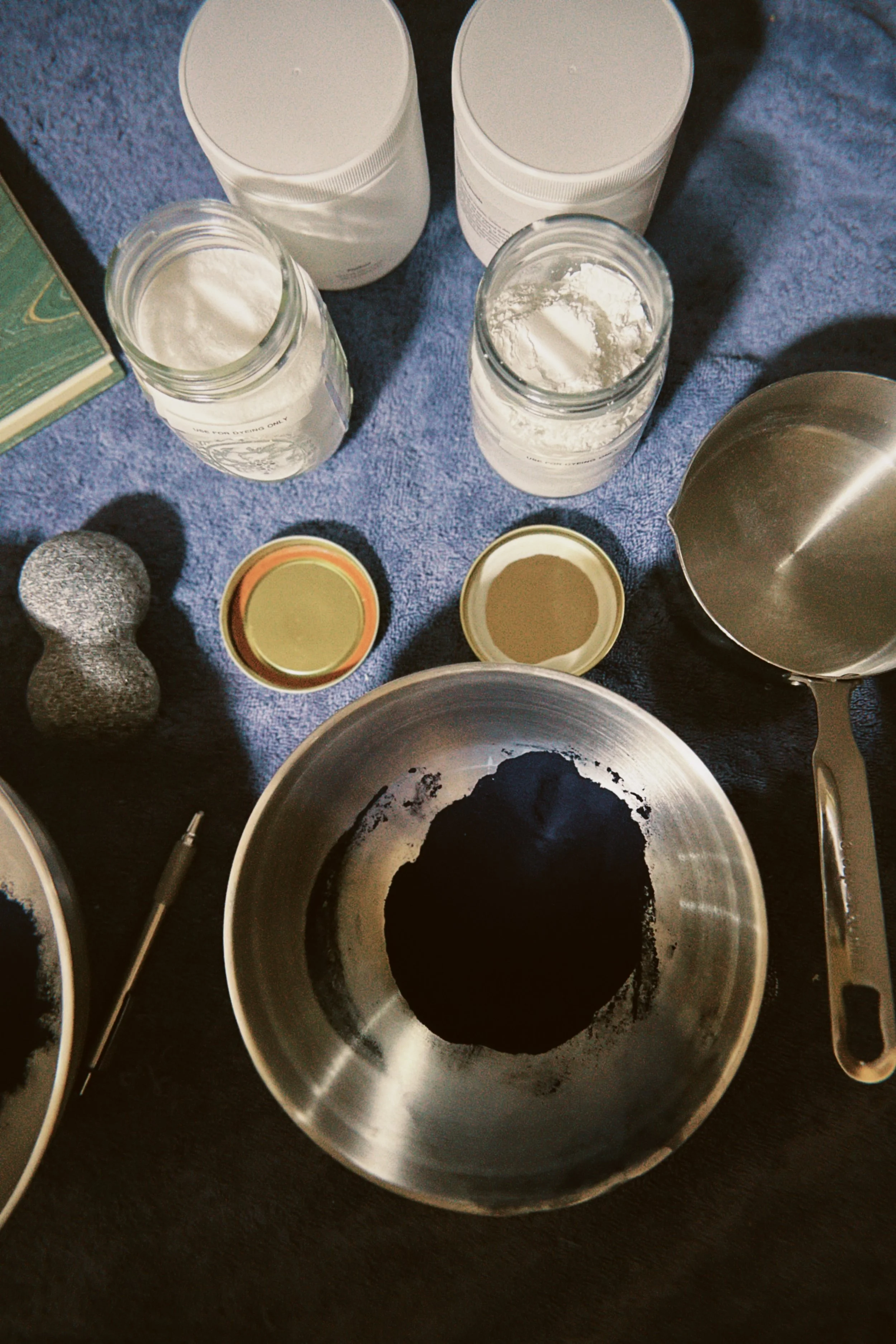
Finely ground indigo dye.
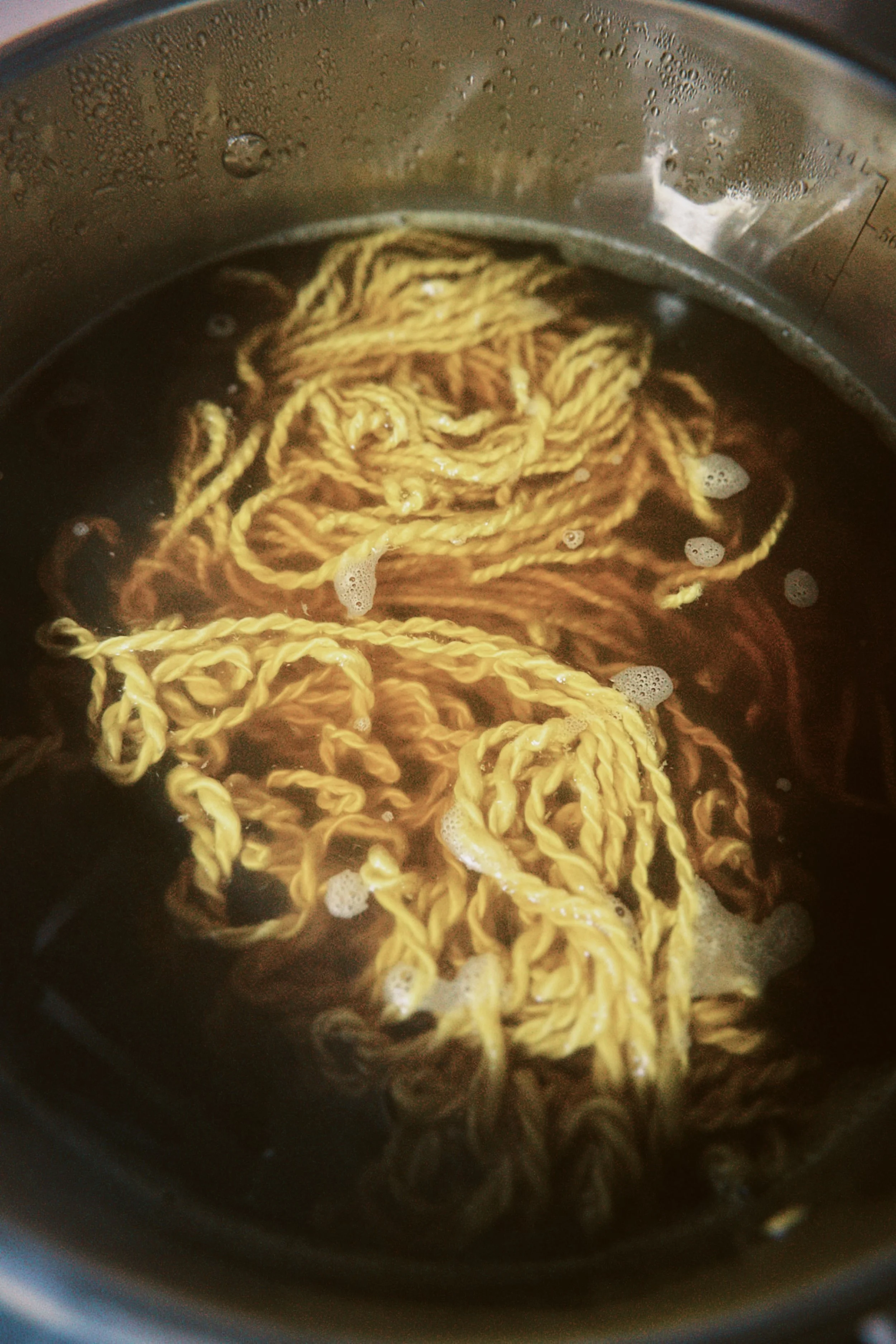
Alpaca yarn in the Pericon dye vat.
Before adding the cochineal, I soaked some skeins in a bath of pericón, a wild marigold, while others remained their natural hue. One by one, I dipped the yarn into the dye vat, watching as the skeins transformed. Those touched by pericón emerged a deeper red, while the rest appeared more luminous. By adjusting the number of dips and the time in the vat, I could coax the colors even further: a touch of acid turned the red to cherry, and a dip in indigo deepened it to burgundy. I added a few skeins of silk to the cochineal and indigo baths as well, and they came out in shades of violet and plum. The spectrum of reds, and the purples that came with them, was breathtaking.
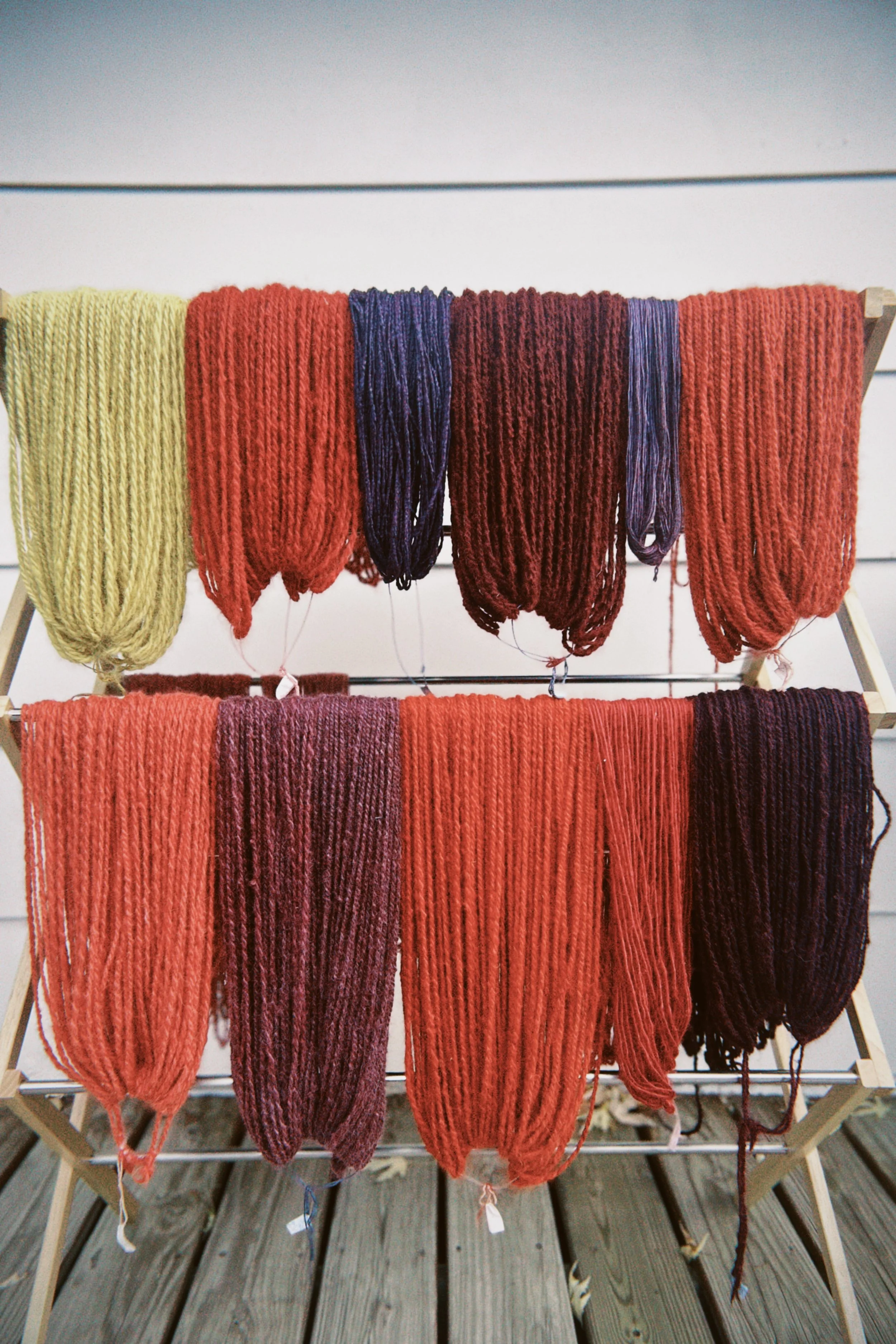
A range of pericón, cochineal, and indigo dye alpaca yarn.
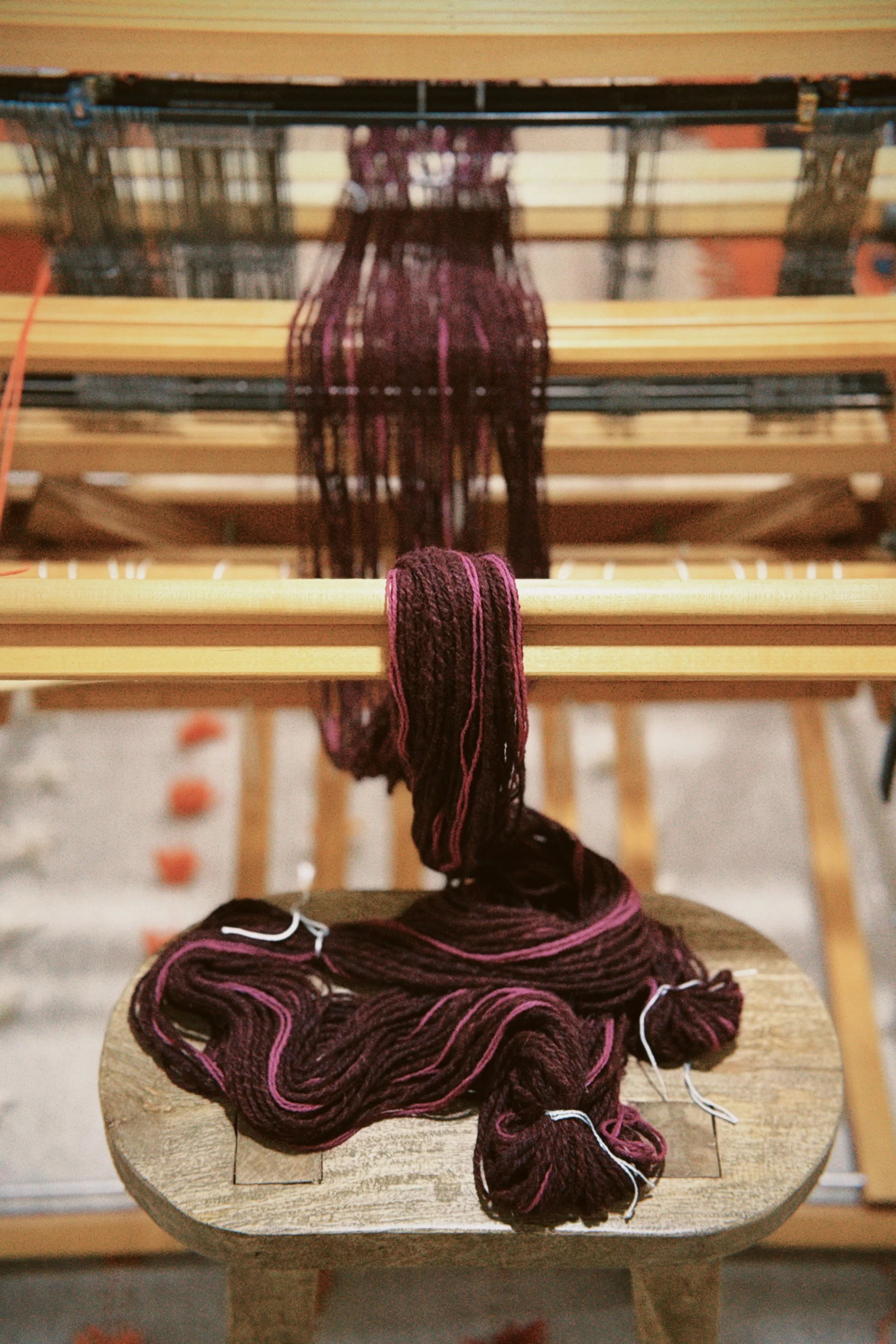
Warp chain read to beamed onto the loom .
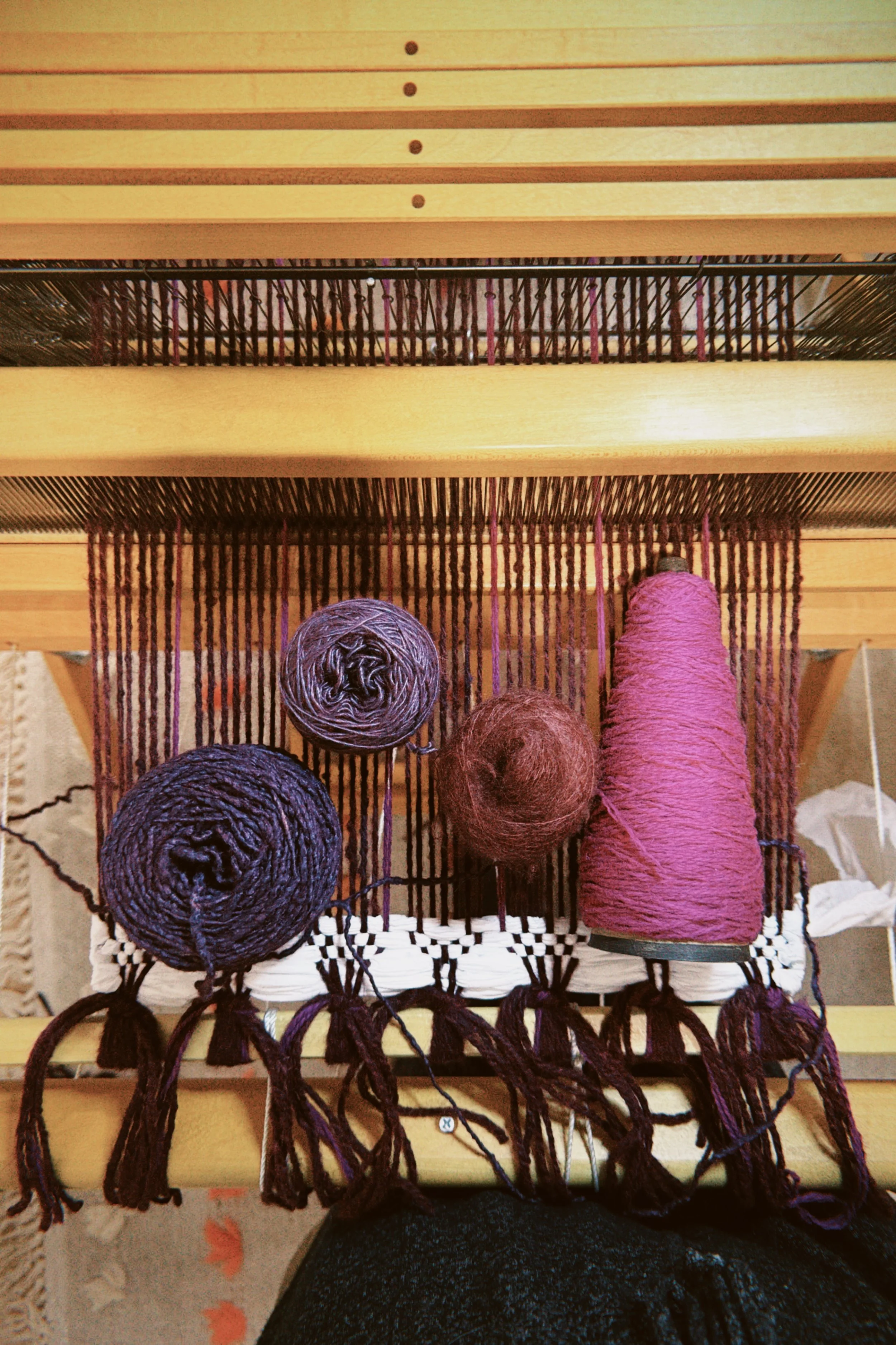
Planning weft yarns to use in this piece
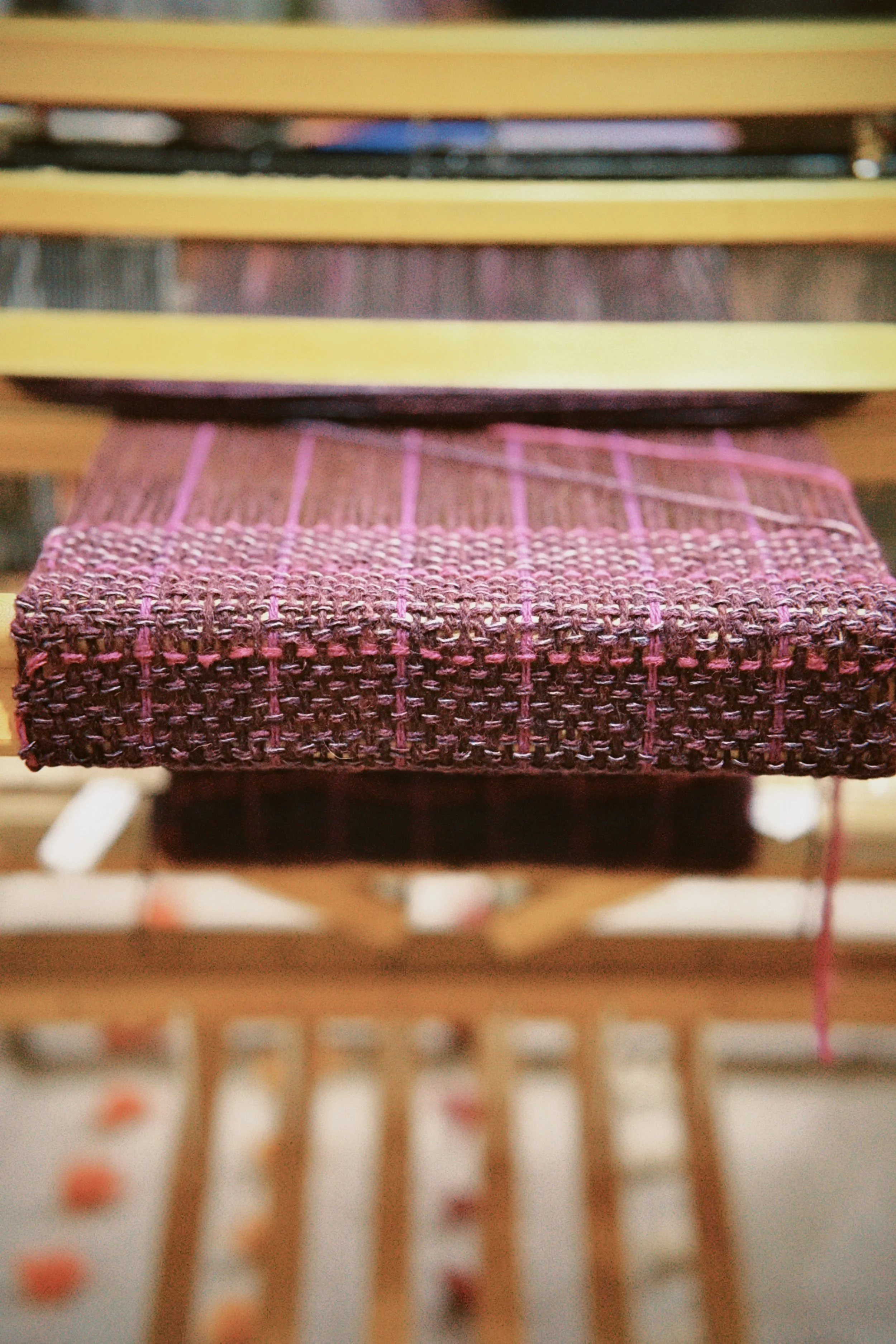
The first few inches of this weaving.
In February 2025, I finally settled at the loom and began weaving the scarves, one after another, letting the work rest and returning whenever inspiration called. Alongside the handspun alpaca, I wove in merino wool, mohair, and silk, each picked for its unique qualities: warmth, a gentle halo, a subtle sheen. The finished scarves are exquisitely soft and drape gracefully around the neck, as light as a whisper against the skin.
Just a few days ago, I tied off the final threads. Watching this small collection take shape, one scarf at a time, has been a joy, and now it's time for each to find its new home.
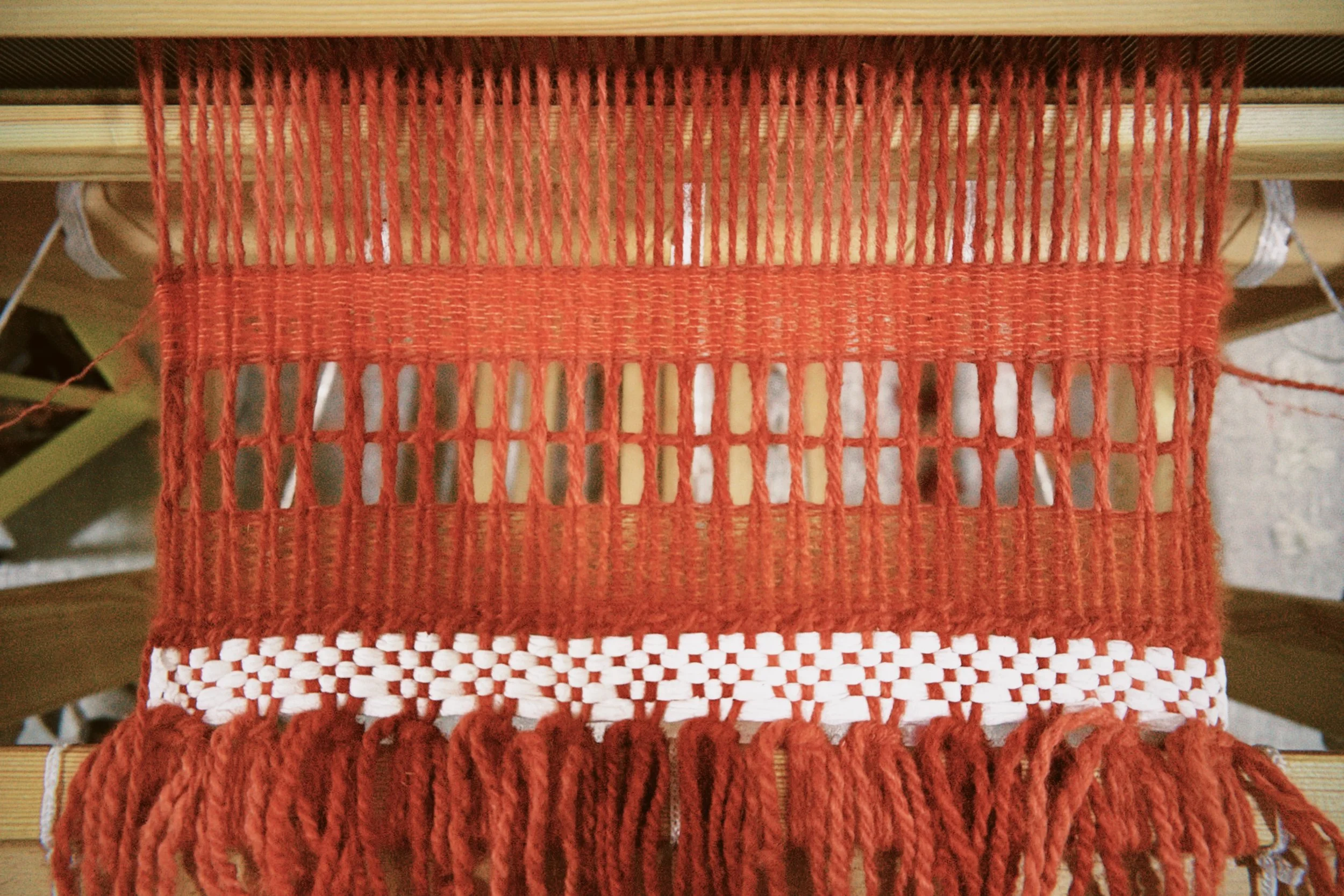
Another piece on the loom, using a Leno structure in between the bands on plain weave.
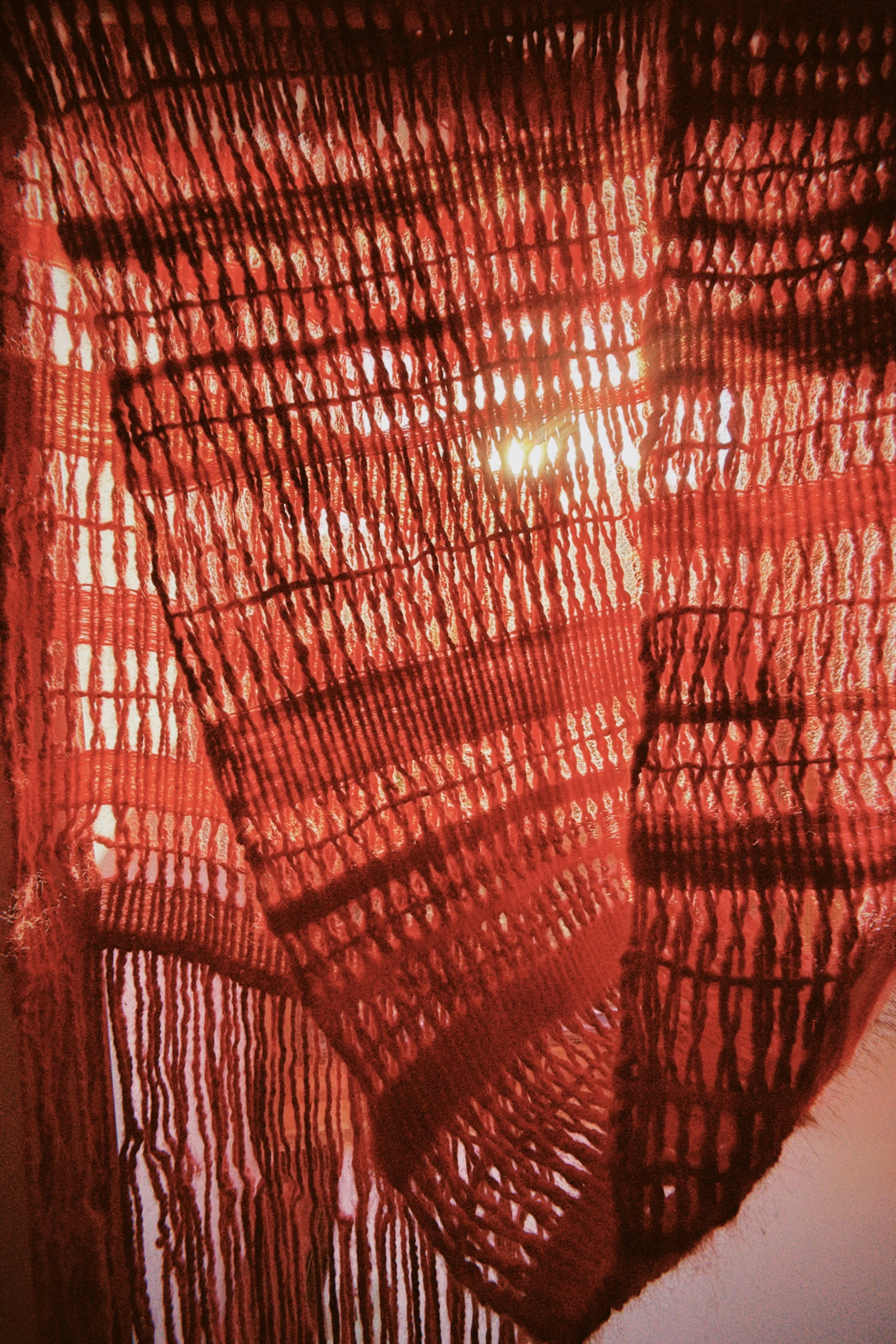
Finished scarf in the sun.
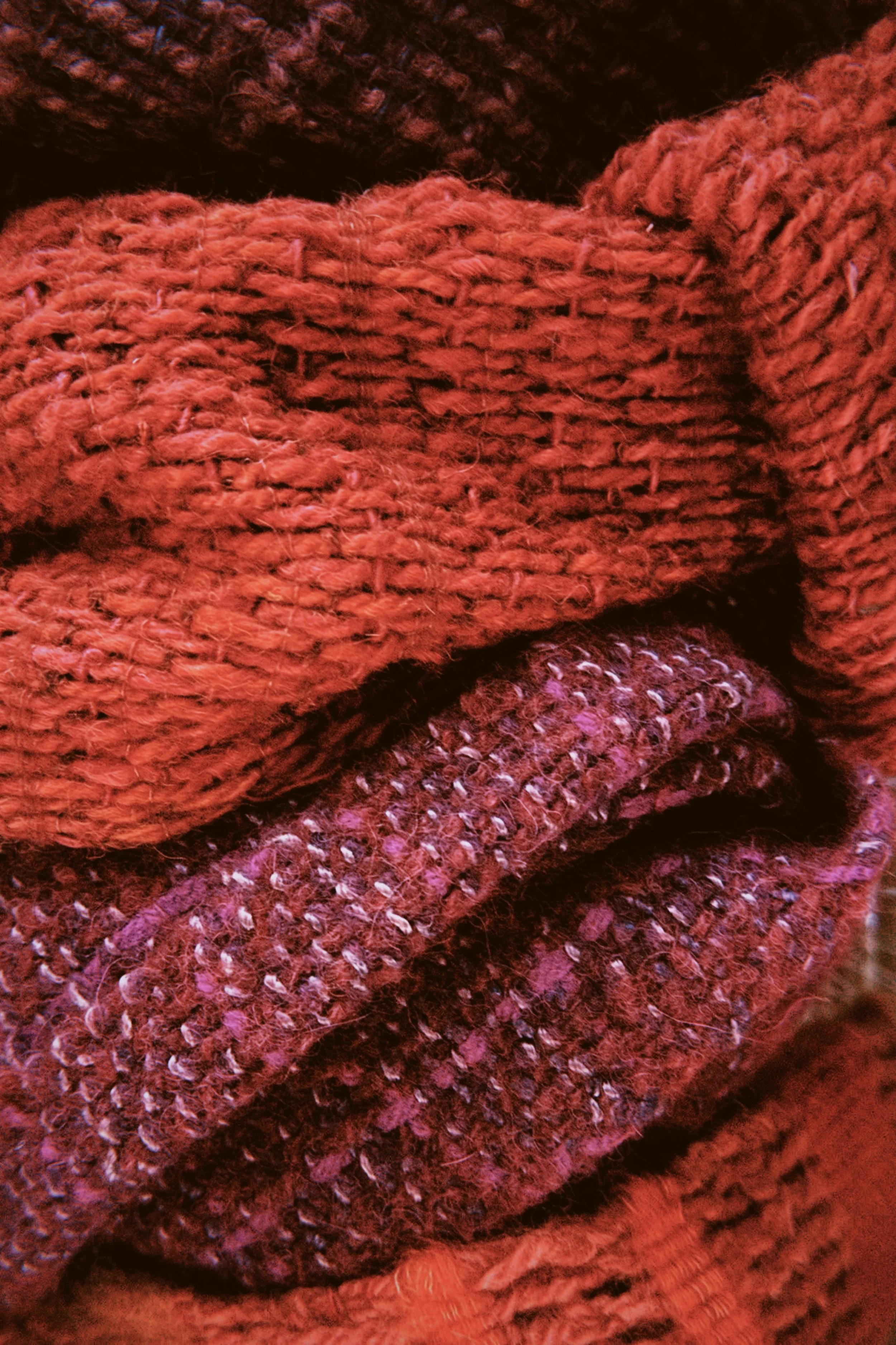
These three pieces are done and nestled into each other.